
Description
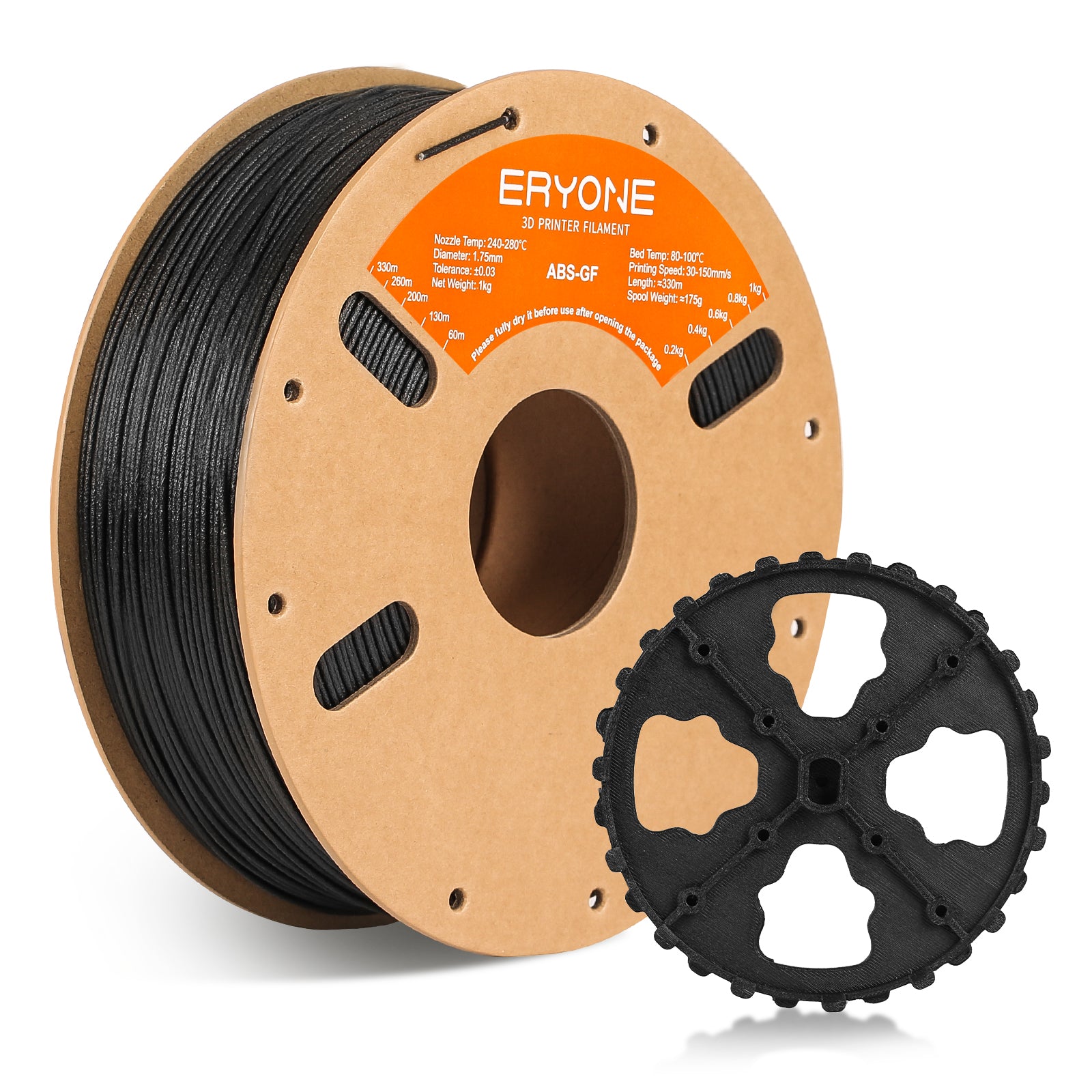
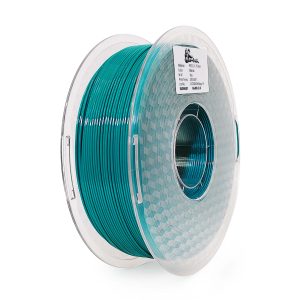
Eryone ABS-GF10 — Glass Fibre Reinforced ABS for Fast, Functional Printing
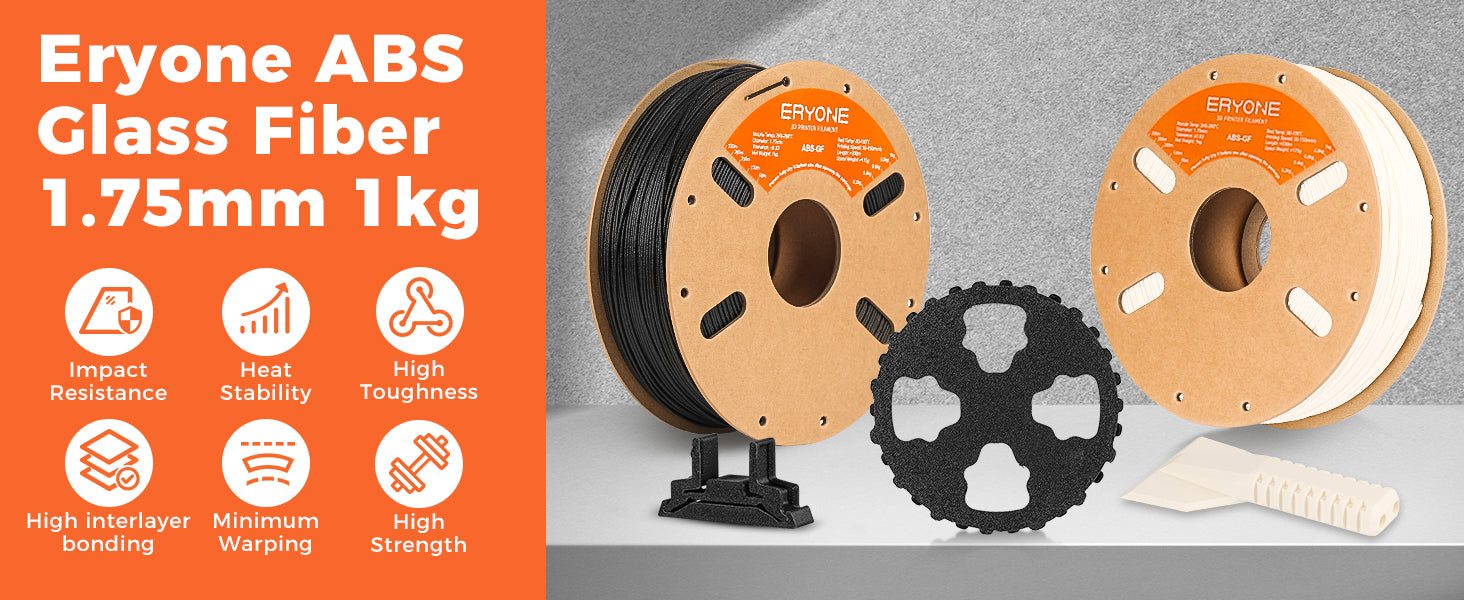
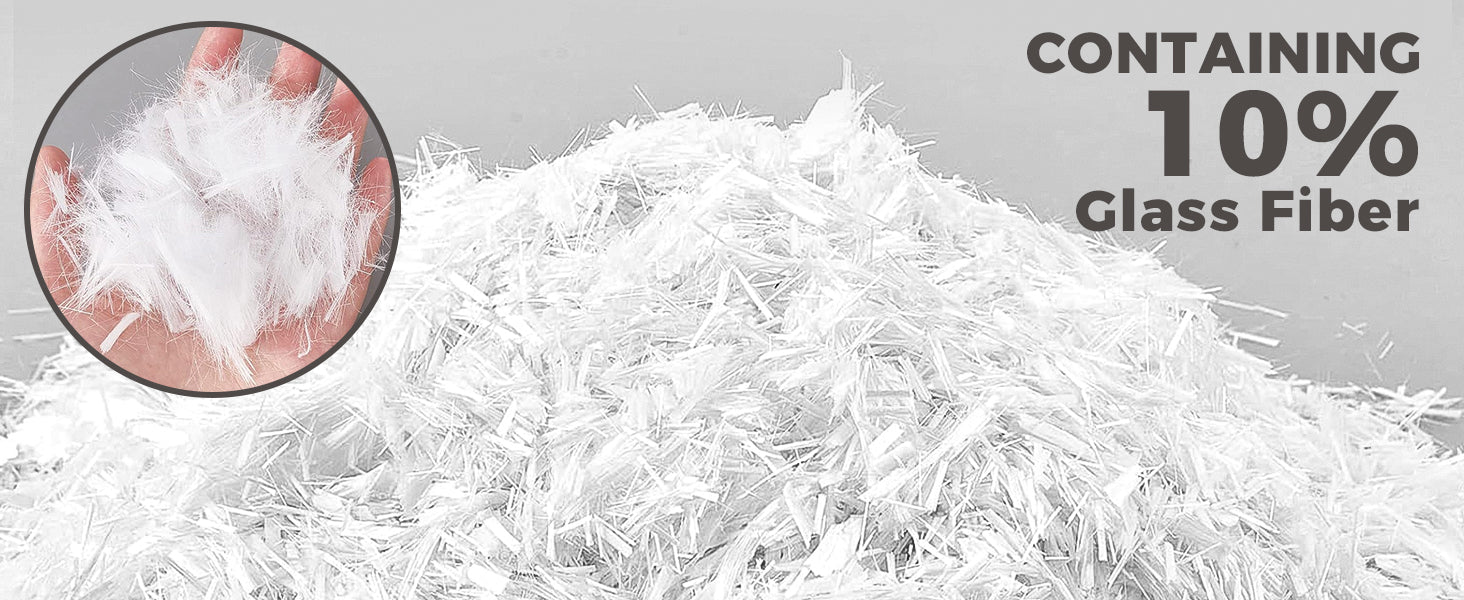
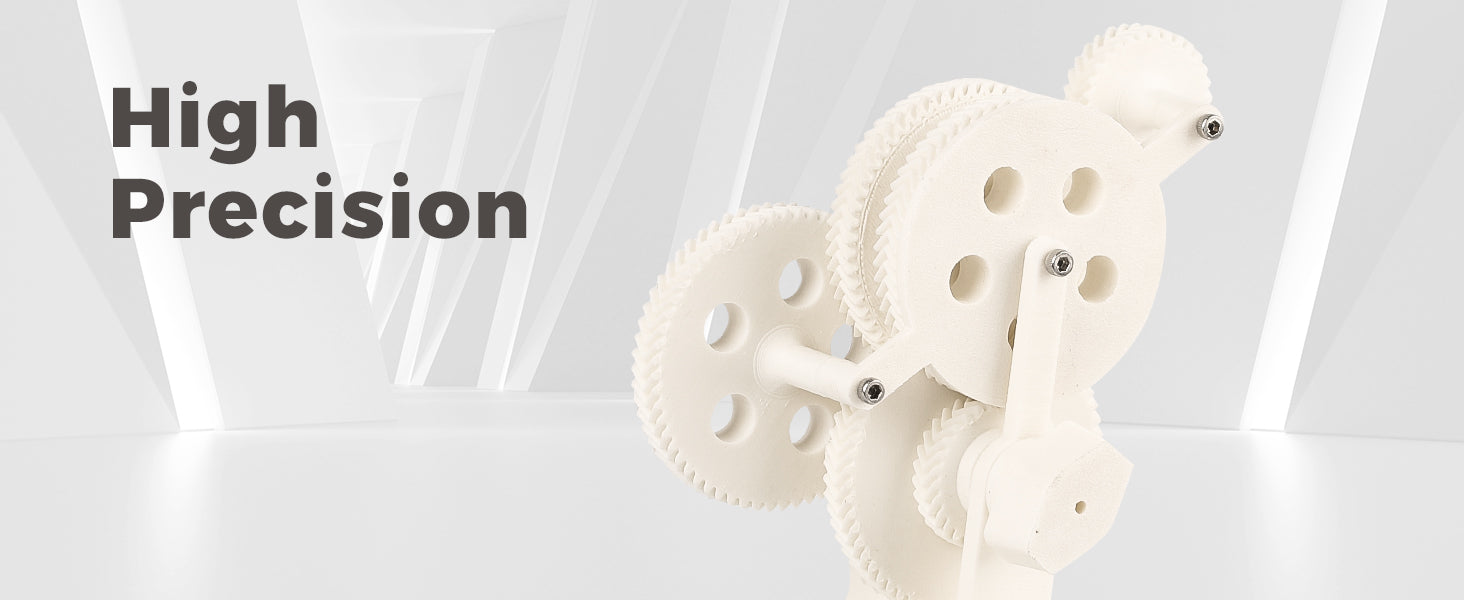
Eryone ABS-GF10 combines standard ABS with 10% glass fibre reinforcement, delivering a balanced boost in strength, rigidity, and warp resistance while keeping print speeds high — up to 150mm/s. Unlike many engineering filaments that demand a fully enclosed chamber, ABS-GF10 is formulated to support open-environment printing, making it more accessible for makers without a dedicated enclosed printer.
The glass fibre content produces a distinctive matte, fine-sand surface texture that looks and feels different from standard glossy ABS — a look many users prefer for functional and industrial-style parts.
Why Glass Fibre Reinforced ABS?
Standard ABS is a proven engineering material, but glass fibre reinforcement takes it further — improving rigidity and dimensional stability while reducing the warping that ABS is notorious for. The 10% fibre content strikes a middle ground: meaningfully stiffer and more heat resistant than standard ABS, without the print difficulty or nozzle wear severity of more heavily loaded composites like CF-reinforced variants.
Open or Enclosed Printing
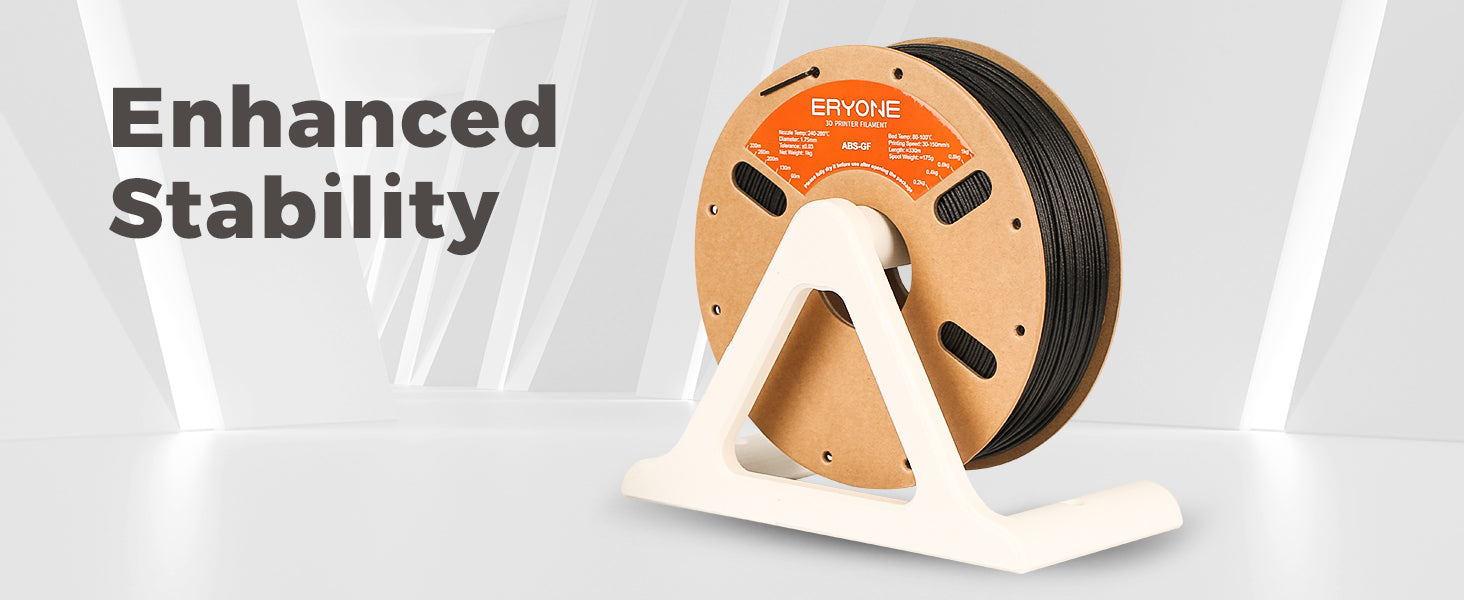
While sealed/enclosed printing produces the best results — improved layer adhesion and reduced warping — ABS-GF10 is engineered to support open-frame printing too. This flexibility makes it a practical option for makers who don’t have an enclosed printer but still want glass-fibre-reinforced ABS performance.
Heat Resistance
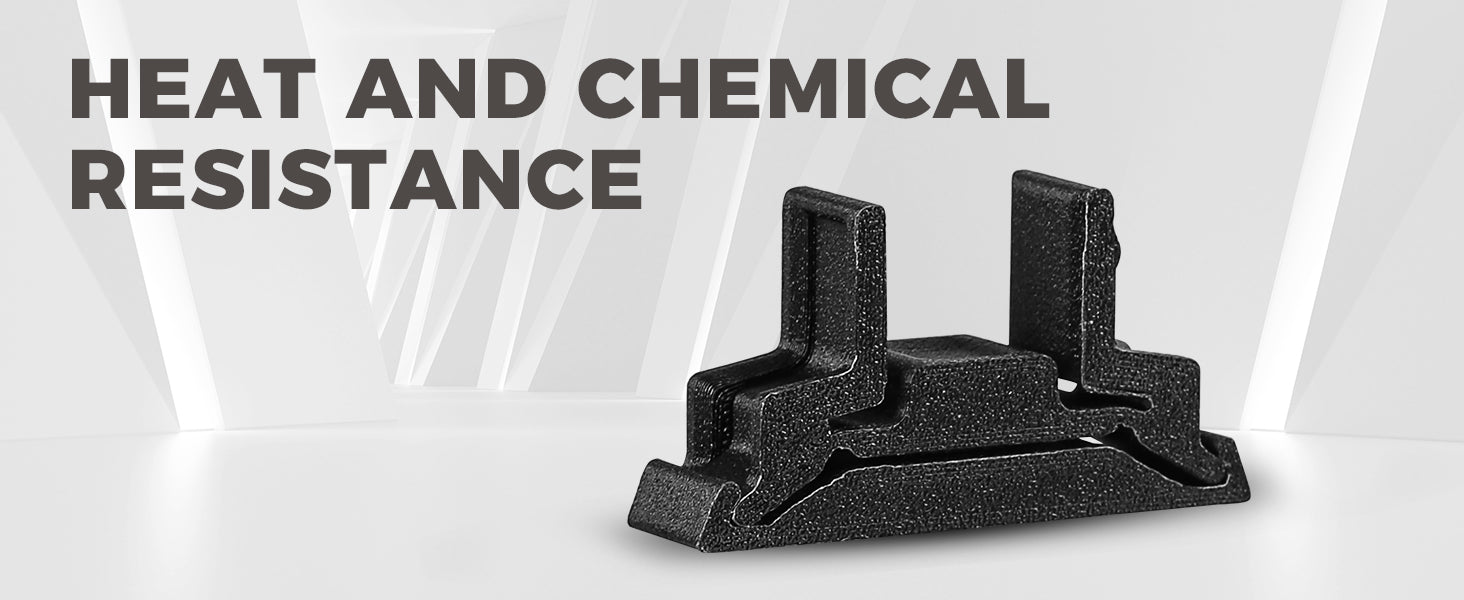
With a heat distortion temperature of 82°C and a glass transition temperature of 104°C, ABS-GF10 handles warm environments that would soften standard PLA or PETG — engine bays, sun-exposed enclosures, and functional parts near moderate heat sources.
Print Settings
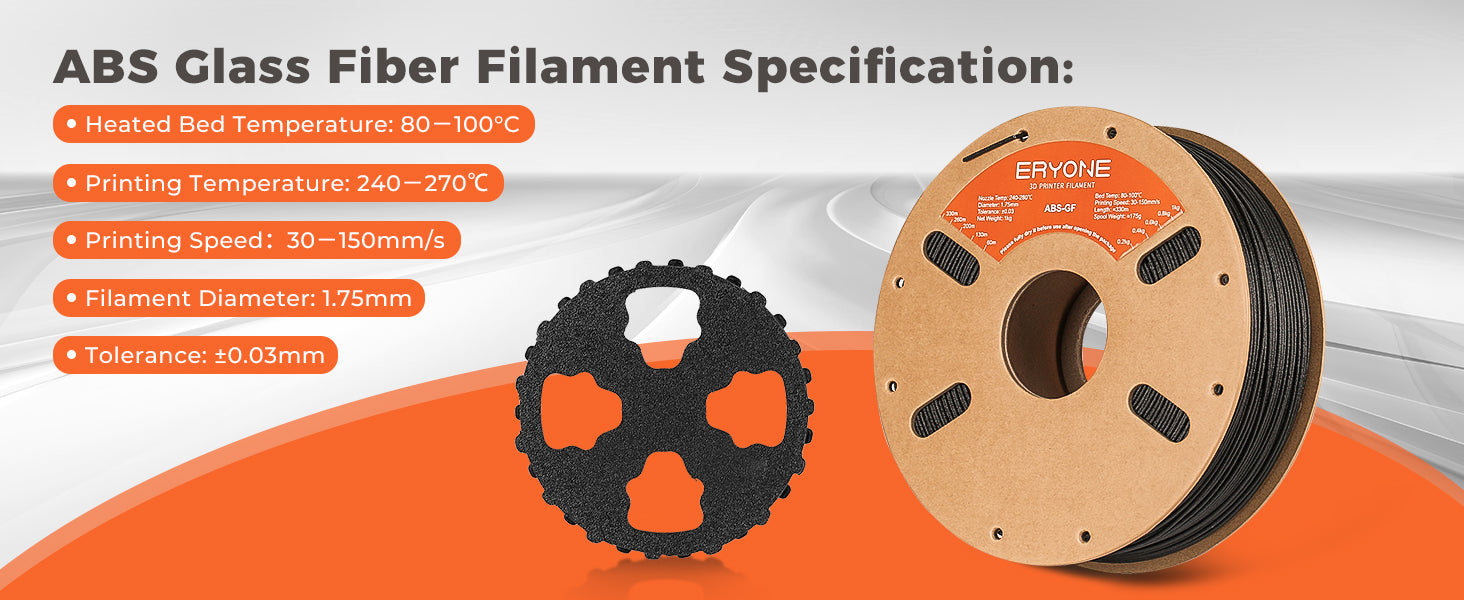
Nozzle temperature: 240–280°C
Bed temperature: 80–100°C
Bed surface: glass, PEI, or spring steel plate
Print speed: 30–150mm/s
Enclosure: sealed printing recommended for best quality; open printing supported
Drying: 60°C for 4 hours
Mechanical Properties
Tensile strength (X-Y): 37.2 MPa
Elastic modulus (X-Y): 1735.8 MPa
Bending strength: 57.9 MPa
Bending modulus: 2487.4 MPa
Charpy impact strength: 6.2 kJ/m²
Density: 1.1 g/cm³
Heat distortion temperature: 82°C
Glass transition temperature: 104°C
Test specimens printed at 270°C, 150mm/s, 90°C bed, 100% infill, 0.4mm nozzle.
Applications
Tooling fixtures and manufacturing jigs
Enclosures and housings requiring dimensional stability
Structural components needing rigidity beyond standard ABS
Functional prototypes and industrial-style parts with a matte finish
Any application needing a balance of strength, warp resistance, and print speed

Eryone Glass Fiber ABS is a glass fiber reinforced ABS material that supports printing in
open environments. It features a balanced combination of strength, rigidity, and warping resistance, with a heat resistance temperature of up to 82°C. The printing speed can reach 150 mm/s, and it
has a matte, fine sand-smooth surface texture. It offers excellent mechanical properties, thermal
stability, and printing efficiency, making it suitable for 3D printing applications that require certain
levels of strength, rigidity, and heat resistance, such as tooling fixtures, manufacturing jigs, enclosures, and structural components. Note: The glass fiber content is 10%.
Part I: Suggests Printing Parameters
| Parameter | Set up |
| Nozzle temperature | 240-280 ℃ |
| Bed temperature | 80-100℃ |
| Bed materia | glass, PEI, spring steel plate |
| Bottom printing temperature | / |
| Sealed printing | Sealing print quality is better, supporting open printing |
| Printing speed | 30-150mm/s |
| Drying conditions | 60℃, 4h |
Part II: Physical Properties of Materials
| Property | Testing Method | Unit | Typical Value |
| Density(g/cm³ at 21.5 ° C) | ASTM D792 (ISO 1183, GB/T 1033) | g/cm³ | 1.1 |
| Vicat Softening Temperature(° C) | ASTM D1525 (ISO 306 GB/T 1633) | ℃ | / |
| Heat distortion temperature(° C) | ASTM D648 1.8MPa 0.45MPa | ℃ | 82 |
| Glass transition temperature (° C) | DSC, 10 ° C/min | ℃ | 104 |
| Melt Index(g/10 min) | 220 ° C, 10kg 240 ° C, 2.16 kg | g/10min | 30 |
Part III: Mechanical Properties of Printed Samples
| Property | Test conditions | Test standards | unit | Typical Value |
| Tensile strength X-Y | 50mm/min | GB/T 1040.4 | MPa | 37.2 |
| Elastic modulus X-Y | 50mm/min | GB/T 1040.1-2006 | MPa | 1735.8 |
| Elongation at break X-Y | 50mm/min | GB/T 1040.4 | % | 2.0 |
| Tensile strength X-Z | 50mm/min | GB/T 1843 | MPa | 19.2±4 |
| Elastic modulus X-Z | 50mm/min | GB/T 1040.1-2006 | MPa | 1651.2 |
| Elongation at break X-Z | 50mm/min | GB/T 1040.4 | % | 1.6 |
| Bending strength | 2mm/min | GB/T 9341 | MPa | 57.9 |
| Bending modulus | 2mm/min | GB/T 9341 | MPa | 2487.4 |
| Charpy Impact strenght | 2.75J | GB/T 1843 | kJ/m2 | 6.2 |
Note: All splines are printed under the following conditions: printing temperature=270 ° C, printing
speed=150mm/s, base plate 90° C, filling=100%, nozzle diameter=0.4mm


Reviews
There are no reviews yet