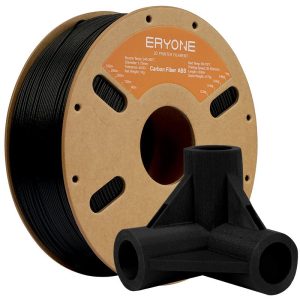
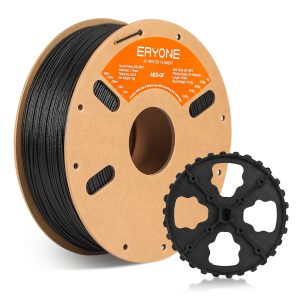
material Selected

ABS

Frequently Asked Questions

What Is ABS Filament?

ABS (acrylonitrile butadiene styrene) is a durable, impact-resistant thermoplastic known for its strength and heat resistance, well above what PLA can handle. It’s a long-standing engineering filament used for functional parts, tool handles, and enclosures that need to survive real-world knocks and heat.

What Temperature Should I Print ABS At?

Most ABS prints between 220–250°C on the nozzle, with a bed temperature of 80–110°C. Exact settings vary by brand and colour, so always check the specific product listing for the manufacturer’s recommended profile.

Why Does ABS Warp So Easily?

ABS shrinks noticeably as it cools, and on an open-frame printer the bottom layers stay warm on the heated bed while the top layers cool to room temperature. That uneven cooling creates internal stress that pulls corners up off the bed, which is why a stable, warm printing environment matters so much.

Do I Need An Enclosure To Print ABS?

An enclosure is strongly recommended, especially for larger or taller parts. Keeping the ambient chamber temperature around 40–60°C dramatically reduces warping and layer splitting by letting the part cool slowly and evenly rather than being hit with a sharp temperature drop.

How Do I Stop My ABS Print Lifting Off The Bed?

Good first-layer adhesion is essential — a properly heated bed, a clean PEI or glass surface, and a dedicated ABS adhesive (such as ABS slurry or a purpose-made bed adhesive) all help. Adding a brim also gives extra surface area to anchor the corners, which are the first place warping shows up.

Should I Use A Part Cooling Fan With ABS?

Generally, minimal to no cooling fan works best. ABS relies on staying warm to bond layers properly and resist warping, so heavy cooling — helpful for PLA — actually increases the risk of cracking and delamination with ABS.

Does ABS Filament Need To Be Dried?

ABS is hygroscopic and can absorb moisture over time, which leads to bubbling between layers, poor adhesion, and rough surface quality. It typically takes longer to absorb noticeable moisture than materials like PLA or nylon, but drying is worthwhile if a spool has been left open in a humid environment.

Is ABS Safe To Print Indoors?

ABS emits fumes, including styrene, during printing, so good ventilation or an enclosure with filtration is recommended, particularly for extended prints or shared spaces.