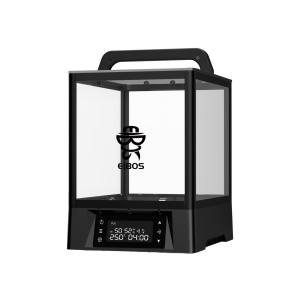
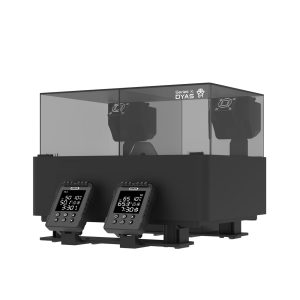
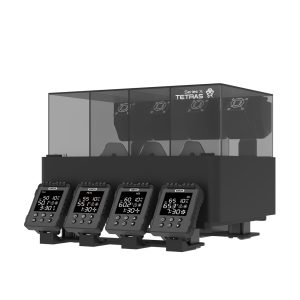
3D printing filament is hygroscopic, meaning it absorbs moisture from the air over time. Wet filament causes stringing, popping, clogs, weak layer adhesion, and a rough surface finish. An Eibos dryer removes that moisture and keeps filament in optimal printing condition, even reviving old or brittle spools.
Eibos dryers are compatible with 1.75mm, 2.85mm, and 3.00mm filament, including PLA, PETG, ABS, ASA, TPU, PA/nylon, PC, PVA, and carbon-fibre blends. Spool capacity varies by model, from single and double-spool dryers up to larger units that hold multiple 1kg or 3kg rolls.
Yes. Eibos dryers double as active storage boxes, with filament exit holes on the top, front, and back so you can feed filament straight to your printer while it’s being dried, rather than drying a spool separately before loading it.
Depending on the model, Eibos dryers heat from around 40°C up to 70–80°C, with adjustable settings and timers from as little as one minute up to 24 hours or continuous unlimited drying, so you can match the temperature and duration to the specific filament type.
Eibos dryers include a built-in humidity sensor with real-time readings on the LCD display, typically covering a 10–99% relative humidity range. A drop and stabilisation in the displayed humidity level is a good indicator that the filament has dried out.
Cyclopes and Easdry are compact, affordable dryers suited to one or two spools with manual temperature control. Polyphemus is the premium option, with 360° auto-rotation for even heating, expandable capacity for larger spools, and more precise humidity and temperature control — better suited to heavier use or AMS-style multi-spool setups.
It isn’t essential, but most Eibos models include dedicated desiccant compartments to help maintain low humidity between drying cycles, particularly useful for long-term storage of moisture-sensitive filaments like nylon or PVA.