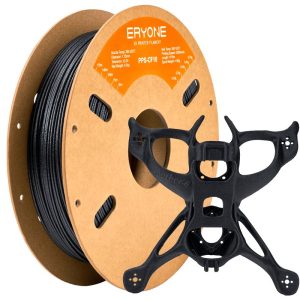
PPS (polyphenylene sulfide) is a semi-crystalline, high-performance engineering thermoplastic known for exceptional heat resistance, chemical resistance, and flame retardancy. Most 3D printing PPS is reinforced with carbon fibre (PPS-CF), giving it metal-matching stiffness and strength for demanding industrial applications.
PPS-CF is one of the most heat-resistant filaments available for FDM printing, with a heat deflection temperature of around 245–264°C and stable continuous use above 200°C — well beyond materials like PA-CF, which typically top out closer to 190°C.
PPS typically prints between 310–350°C on the nozzle, with a bed temperature of 80–120°C. Exact settings vary by brand, so always check the specific product listing or technical data sheet for the manufacturer’s recommended profile.
Not necessarily. PPS-CF is specifically engineered to be dimensionally stable and printable on non-heated-chamber printers, though a heated chamber can still improve results, particularly for larger parts or maximum mechanical properties.
A hardened steel nozzle is essential. The carbon fibre reinforcement is highly abrasive and will wear through a standard brass nozzle quickly, so a wear-resistant hardened steel or ruby-tipped nozzle is strongly recommended.
PPS has naturally low moisture absorption compared to nylon or PVA, but drying before use is still recommended for best results, typically at 100–140°C for 8–12 hours in a filament dryer. Take care not to exceed the spool’s temperature rating during drying.
Yes, exceptionally. PPS resists a wide range of acids, alkalis, fuels, and organic solvents, and doesn’t dissolve in any known solvent below 200°C, making it a strong choice for chemically harsh environments where most other filaments would degrade.
PPS-CF is suited to demanding applications such as automotive and aerospace components, industrial machinery parts, and flame-retardant electronics housings — anywhere a part needs to withstand high heat, chemical exposure, or open flame.