
Description
One of the Highest-Performance FDM Filaments Available
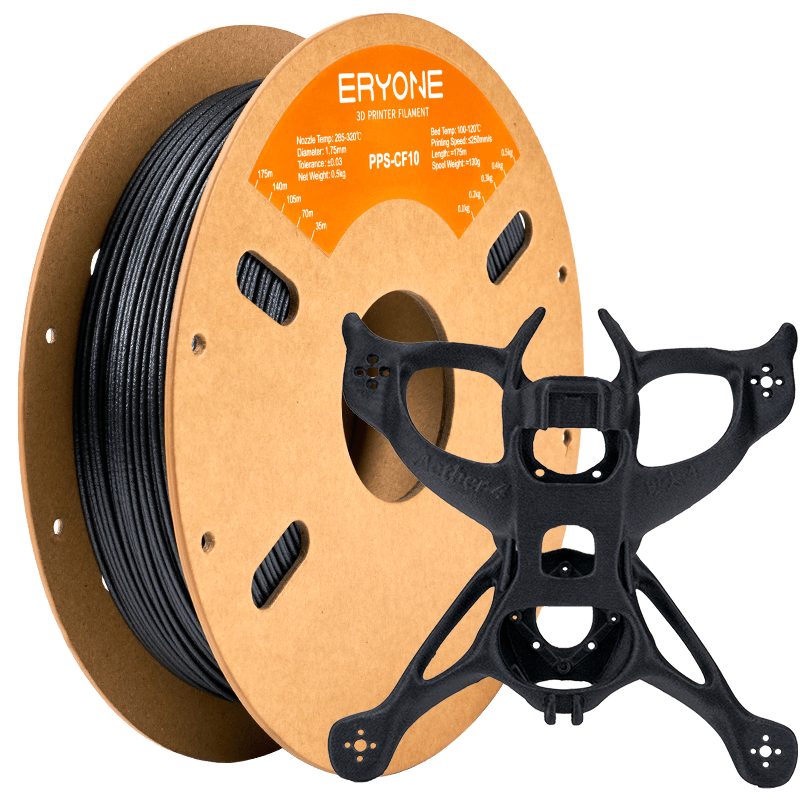
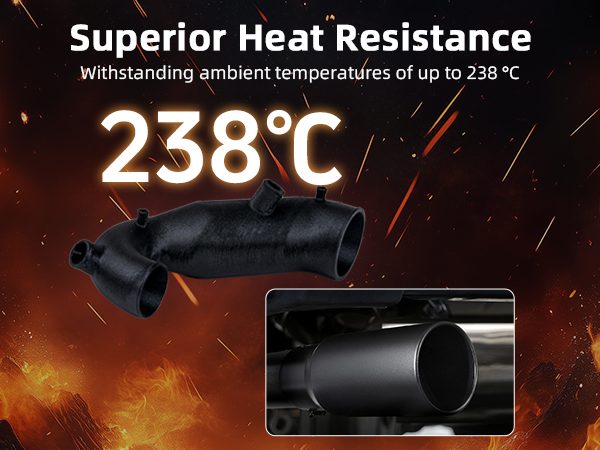
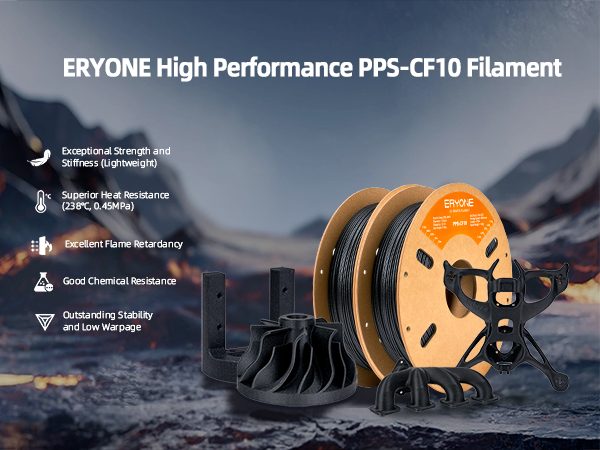
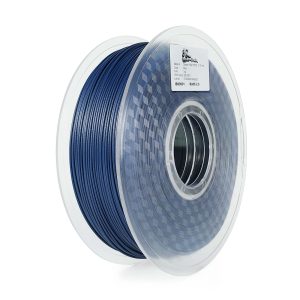
Eryone PPS-CF10 is a 10% carbon fibre reinforced polyphenylene sulphide filament built for applications where standard engineering filaments can’t survive. With a heat deflection temperature of 238°C at 0.45 MPa (post-annealing), inherent chemical resistance to fuels, solvents, and acids, and UL94 V-0 flame retardancy, PPS-CF10 produces production-grade parts that perform in environments that would destroy PETG, nylon, or ABS.
This is not an everyday filament. It requires a printer capable of 300°C+ nozzle temperatures, a heated bed at 100–120°C, and ideally an enclosed chamber. But if your application demands it, nothing else in the FDM filament range comes close.
Why PPS-CF Over Other Engineering Filaments?
Every engineering filament has trade-offs. PPS-CF10 sits at the top of the FDM performance ladder because it combines properties that no single alternative can match.
Compared to PA-CF (nylon carbon fibre): PPS-CF10 has far higher heat resistance, inherent chemical resistance without coatings, significantly lower moisture absorption, and does not require the same level of drying vigilance.
Compared to PETG-CF: PPS-CF10 operates at temperatures more than three times higher and resists chemicals that would dissolve PETG.
Compared to PC-CF (polycarbonate carbon fibre): PPS-CF10 offers superior chemical resistance and flame retardancy, with comparable mechanical stiffness.
The carbon fibre reinforcement adds stiffness, reduces thermal expansion, and produces a professional matte finish.
Key Properties
Heat deflection temperature: 238°C at 0.45 MPa (post-annealing)
Flame retardancy: UL94 V-0 rated
Chemical resistance: inherently resistant to fuels, solvents, acids, and alkalis
Moisture absorption: extremely low — minimal drying issues compared to nylon
Dimensional stability: excellent — low shrinkage and low coefficient of thermal expansion
Surface finish: matte carbon fibre texture
Applications
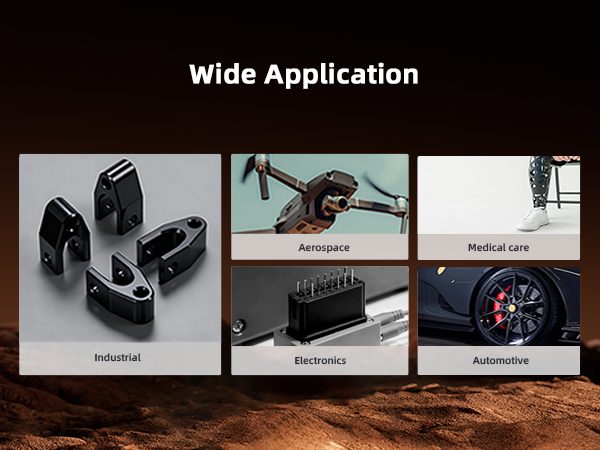
PPS-CF10 is suited to high-stress, high-temperature end-use parts where other filaments would fail. Common applications include automotive under-bonnet components — brackets, ducting, sensor housings, and heat shields that operate near engines and exhaust systems. Aerospace jigs, fixtures, and tooling that need dimensional stability at elevated temperatures. Chemical-resistant enclosures and housings for industrial equipment. Electrical and electronic components requiring UL94 V-0 flame retardancy. Functional prototypes that must survive real-world thermal and chemical exposure during testing.
Print Settings
PPS-CF10 is an advanced material that requires specific printer capabilities and careful setup.
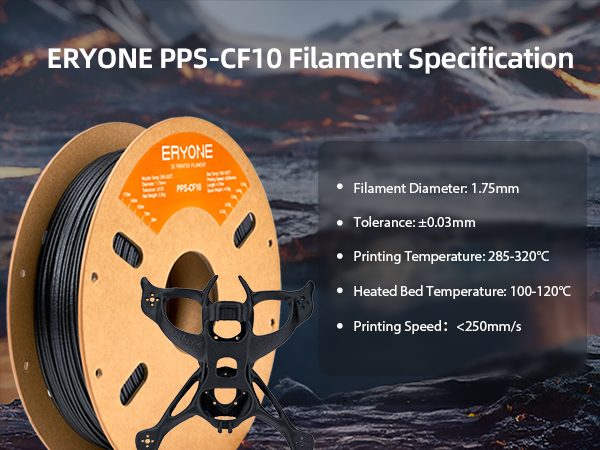
Nozzle temperature: 300–320°C — requires a printer with an all-metal hotend rated for these temperatures
Bed temperature: 100–120°C — PEI or garolite bed surface recommended for adhesion
Enclosure: strongly recommended to prevent warping and layer delamination
Nozzle: hardened steel, 0.4 mm minimum, 0.6 mm recommended — carbon fibre will rapidly destroy brass nozzles
Print speed: 30–60 mm/s for best results
Drying: 80°C for 4–6 hours before printing — store in an airtight container with desiccant when not in use
Post-Print Annealing
PPS-CF10 reaches its maximum heat performance after annealing — a controlled heat treatment process that increases crystallinity and raises the heat deflection temperature to 238°C. Without annealing, the heat deflection temperature is lower. Annealing conditions vary by part geometry and wall thickness — start at 200°C for 1–2 hours and adjust based on results. Parts may experience slight dimensional changes during annealing, so account for this in your design.
Specifications
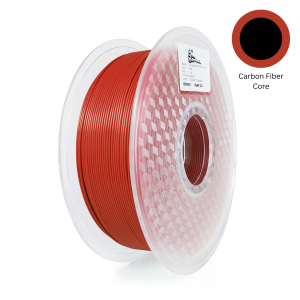
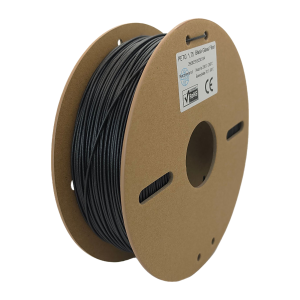
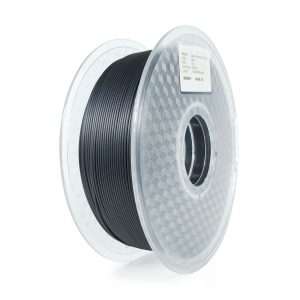
Material: PPS + 10% Chopped Carbon Fibre
Net weight: 0.5 KG (500g)
Diameter: 1.75 mm
Spool size: 0.5 KG
Colour: Black (matte carbon fibre finish)


John Green –
Purchased for use in an alegoo centauri carbon 1 with a panda breath heater. i have not had a completed print as yet, but I think that’s got to do with the filament path not the filament it’s self. The default filament path, is breaking the filament before completion, but what is completing before failure looks great. Have a solution in mind by creating a perspex lid with ptfe tube in the centre to stop most of the bending.