
Description
Carbon Fiber Core PETG-CF — Continuous CF Reinforcement Inside a PETG Shell
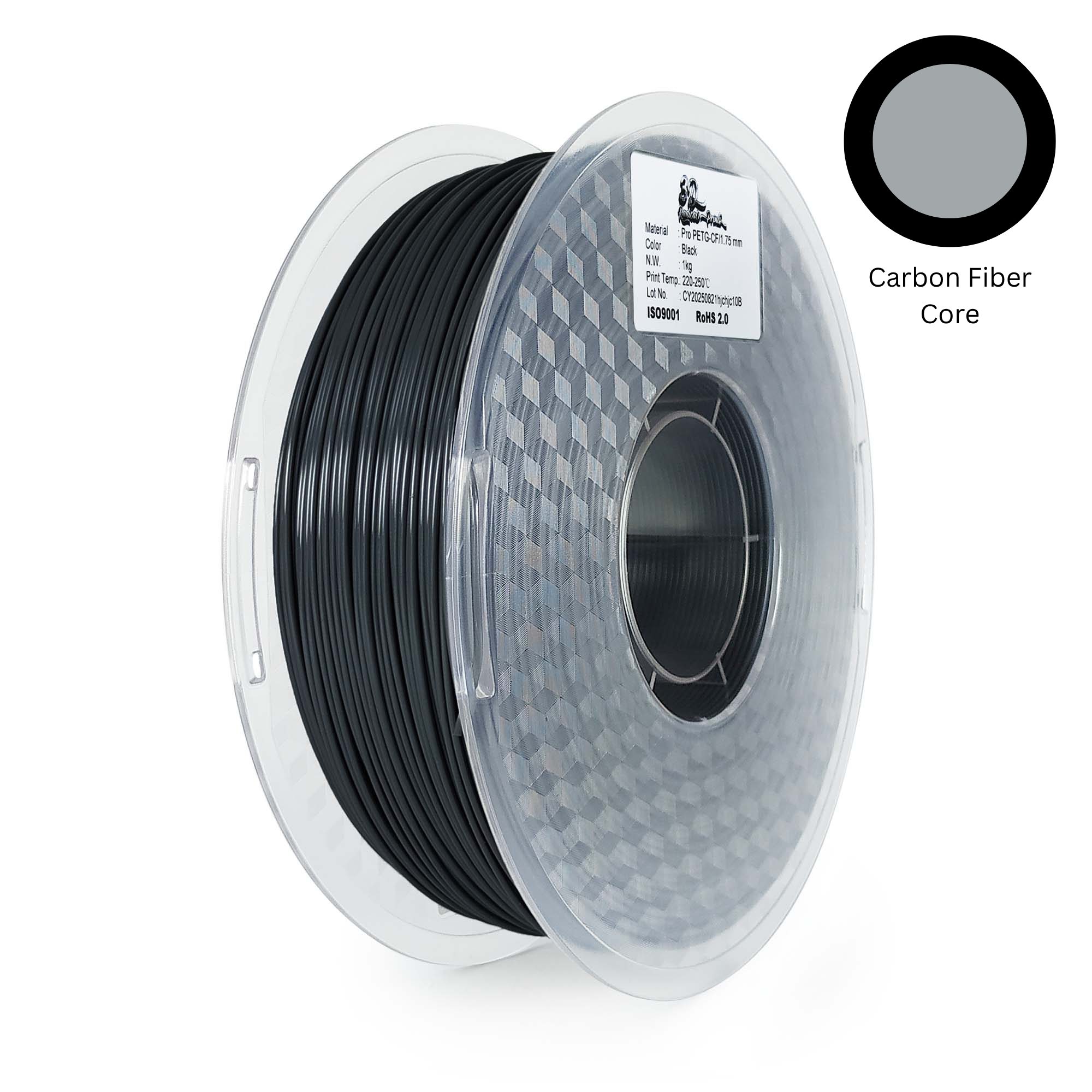
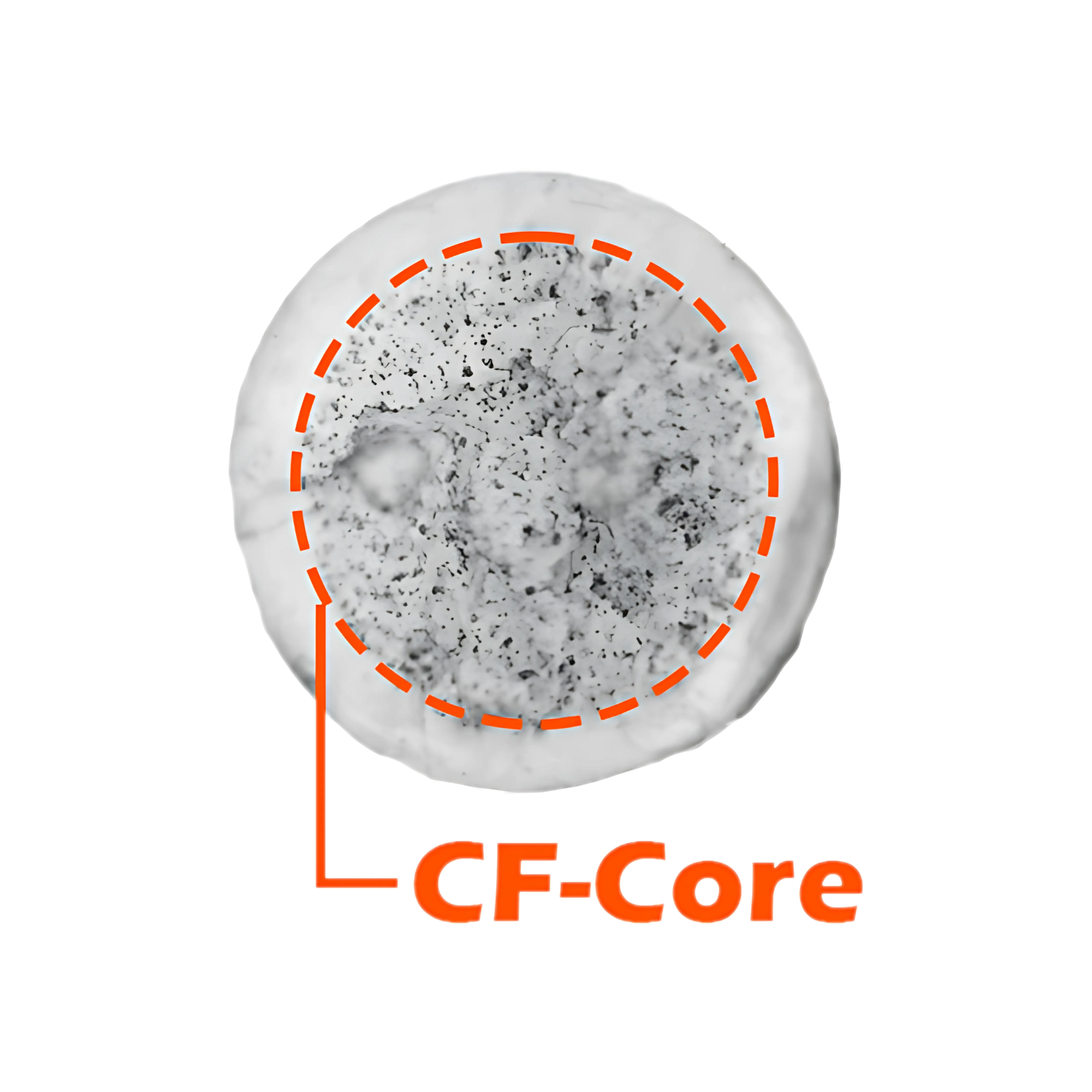
This is not standard carbon fibre filament. Carbon Fiber Core PETG-CF uses a coaxial design — a continuous 20% carbon fibre strand running through the centre of the filament, encased in a PETG outer shell. This gives the printed part true structural reinforcement from an unbroken carbon fibre core, delivering significantly higher tensile strength and rigidity than chopped carbon fibre PETG where short fibre fragments are scattered randomly through the material.
The result is a filament that prints with PETG’s familiar ease — same temperature range, no enclosure required — but produces parts with mechanical properties far closer to engineering-grade composites, combined with PETG’s inherent impact resistance and moisture tolerance.
Core vs Chopped — What’s the Difference?
Carbon Fiber Core PETG (This Product)
A continuous carbon fibre strand runs through the centre of every metre of filament. The fibre is unbroken, providing tensile reinforcement along the print direction — similar in principle to rebar in concrete. The PETG shell protects the fibre from contact with the nozzle bore, meaning no hardened steel nozzle is required.
Chopped Carbon Fibre PETG (e.g. PETG-CF)
Short carbon fibre fragments are mixed into the PETG base material. The fibres add stiffness and reduce warping but don’t provide continuous structural reinforcement. The exposed fibre ends are abrasive and require a hardened steel nozzle.
For maximum rigidity and tensile strength along the print direction, Carbon Fiber Core PETG-CF is the stronger option. For general stiffness improvement in all directions, chopped PETG-CF is more versatile.
No Hardened Steel Nozzle Required
Because the carbon fibre core is fully encased within the PETG shell, it never contacts the nozzle bore. You can print with a standard brass nozzle without any wear concerns — a significant advantage over chopped CF filaments that require hardened steel.
PETG’s Strengths, Retained
The PETG shell carries PETG’s characteristic advantages — higher impact resistance than PLA, better moisture tolerance, and greater heat resistance — while the continuous carbon fibre core adds tensile stiffness that chopped-fibre PETG-CF can’t match along the print direction.
Print Settings
Nozzle temperature: 220–250°C
Bed temperature: 60–80°C
Print speed: 40–90 mm/s
Diameter: 1.75 mm ±0.05 mm
Nozzle: standard brass — no hardened steel needed
Enclosure: not required
Drying: 65°C for 4+ hours if stringing or surface issues appear
Prints with settings essentially identical to standard PETG — no workflow changes needed.
Ideal Applications
Load-bearing brackets, mounts, and structural parts where tensile strength matters
Functional enclosures and housings needing both stiffness and impact resistance
Lightweight rigid frames — drone arms, camera mounts, jigs
Parts that need to resist bending and pulling forces along the print direction
Outdoor or moisture-exposed functional parts where PETG’s resistance matters
Any application where chopped CF isn’t strong enough but you want to stay on PETG print settings
Filament Specifications
| Material | Polyethylene Terephthalate Glycol-Modified |
| Filament Net Weight | 1Kg |
| Filament Diameter | 1.75mm ±0.05mm |
| Spool | Transparent |
| Spool Weight (Empty) | 185g |
| Spool Weight (w/ Filament) | 1.185Kg |
| Package Weight (Spool + Box) | 1.4Kg |
| Package Dimensions | 205x215x70mm |
Print Recommendations
| Print Temperature | 220-250° C |
| Bed Temperature | 60-80° C |
| Print Speed | 40– 90 mm/s |
Drying Recommendation
| Drying Temp | 65° C |
| Drying Time | 4+ Hours |


Reviews
There are no reviews yet