Frequently Asked Questions
What Is PTFE Tube Used For In A 3D Printer?
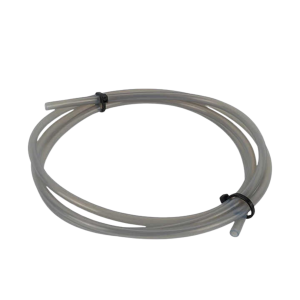
PTFE tube guides filament smoothly between the extruder and hotend, or through the filament path on Bowden-style and AMS setups. Its low-friction surface reduces resistance on the filament, helping ensure consistent, reliable feeding.
How Do I Know What Size PTFE Tube I Need?
PTFE tube size is given as inner diameter (ID) by outer diameter (OD), such as 2x4mm. The ID needs to match your filament diameter (typically 1.75mm filament uses 2–2.5mm ID tube), while the OD needs to match your printer’s fittings or bowden couplers. Check your printer’s specifications or existing tube before ordering.
What’s The Difference Between Standard And Japanese Star-Shaped PTFE Tube?
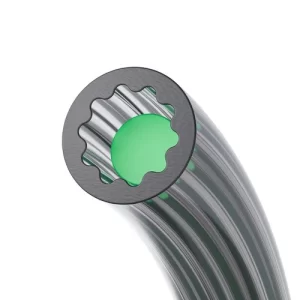
Standard PTFE tube has a smooth round bore, while the Japanese star-shaped tube has a star-profile internal bore that reduces the contact area between the tube and filament. This lowers friction further, which can improve feeding consistency, particularly on longer Bowden runs or with flexible filaments.
Is PTFE Tube Compatible With All Filament Types?
PTFE tube works well with most common filaments, but keep in mind PTFE degrades above roughly 240–250°C, so it shouldn’t be used anywhere it will be exposed to high sustained heat, such as inside an all-metal hotend printing high-temperature materials. It’s intended for the cooler sections of the filament path.
How Do I Know When To Replace My PTFE Tube?
Signs it’s time to replace the tube include inconsistent extrusion, increased retraction issues, visible scoring or wear inside the tube, or a tube end that’s been repeatedly cut and no longer seats cleanly in its fitting. Regularly trimming a worn or deformed tube end can also restore reliable feeding without a full replacement.
Why Should I Use A PTFE Cutter Instead Of Regular Scissors?
A dedicated PTFE cutter gives a clean, flat, perpendicular cut, which matters because an angled or ragged tube end can create a gap or snag point that affects filament feeding and can contribute to clogs. Scissors or a blade often leave an uneven edge that’s harder to seat properly in a fitting.
Is The Bambu Lab A1 AMS Lite Tube Different From Standard PTFE Tube?
Yes, it’s sized specifically for the A1 AMS Lite’s filament path at 2.5x4mm, which differs from the standard 2x4mm tube used on many other printers. Always check the size matches your specific printer and setup before ordering.