
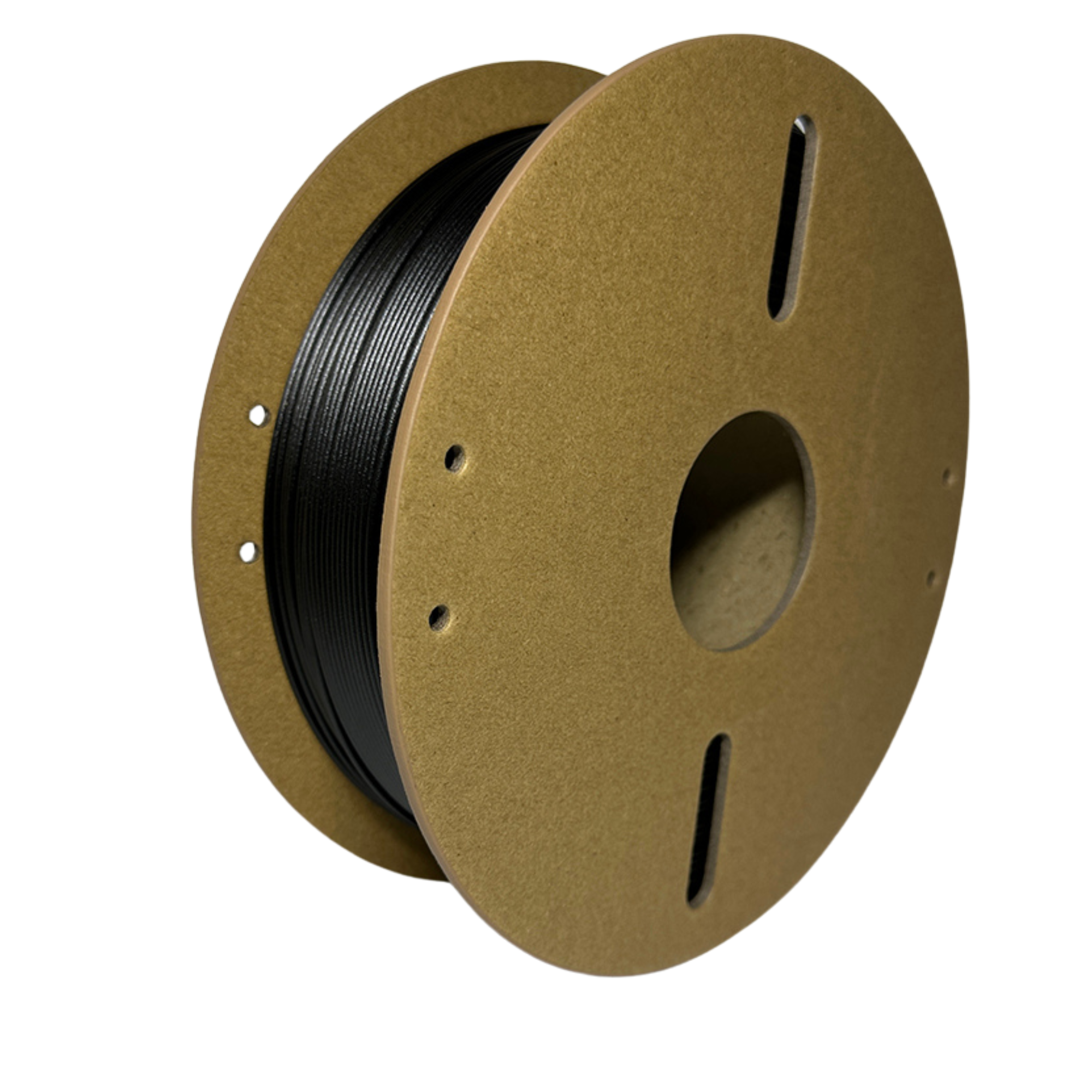
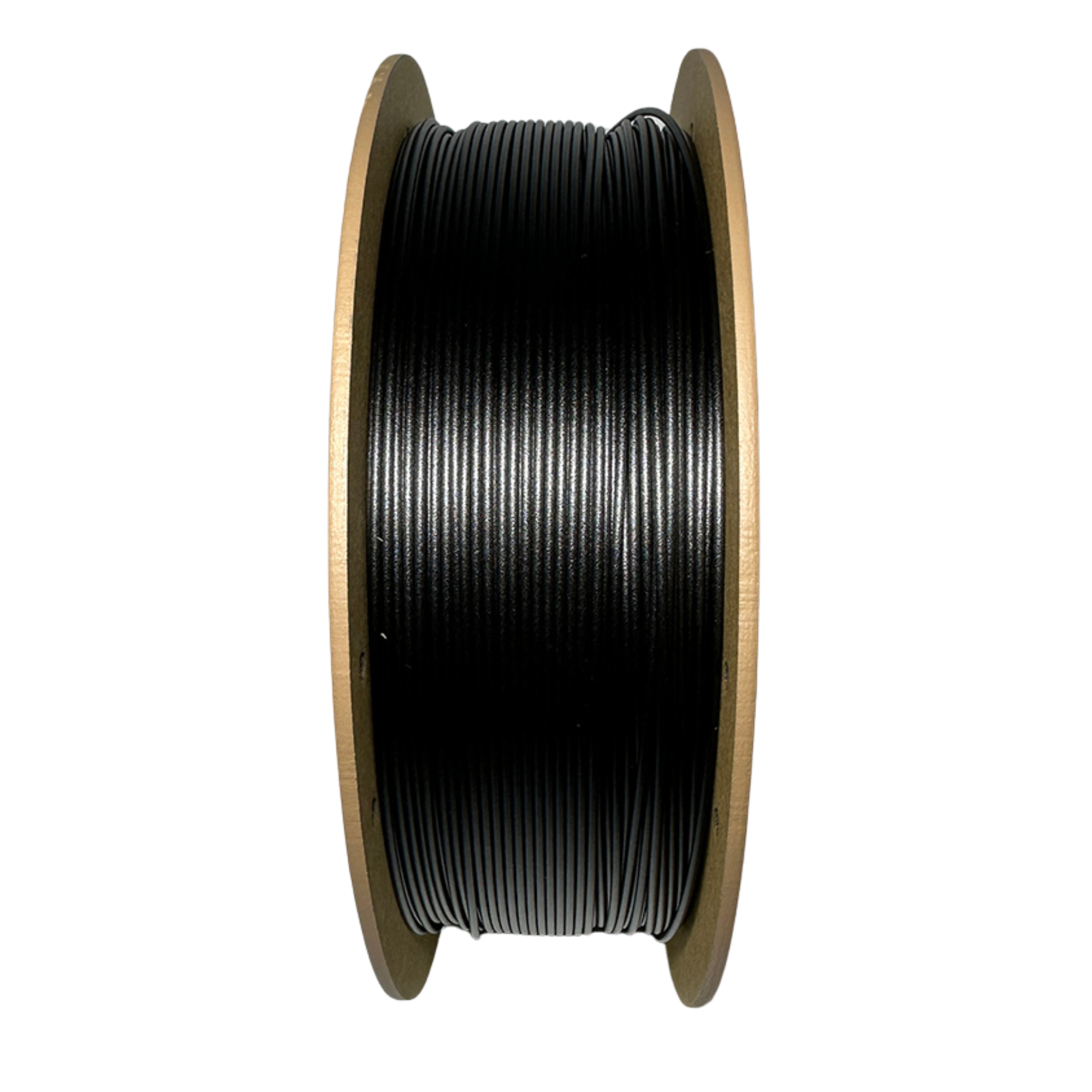
Description
Carbon Fibre Reinforced Polycarbonate — Tough, Heat Resistant, Printable
Basic PC+ CF combines polycarbonate with a 3% PET blend and approximately 15% chopped carbon fibre to deliver one of the toughest, most heat-resistant filaments available for FDM printing. The PET infusion improves flow characteristics, enhances layer bonding, and reduces the brittleness and warping issues that make standard polycarbonate notoriously difficult to print — while the carbon fibre reinforcement adds stiffness, dimensional stability, and a professional matte finish.
At $39.99 per KG on a cardboard spool, it’s an accessible entry point into polycarbonate printing for users who need real engineering performance.
Why PC+ CF Over Standard Polycarbonate?
Pure polycarbonate is one of the strongest FDM materials, but it’s also one of the hardest to print — heavy warping, poor layer adhesion, and demanding temperature requirements. The 3% PET blend in PC+ addresses these issues by improving melt flow and layer bonding, making it print cleaner and more reliably than unmodified PC. The carbon fibre reinforcement further reduces warping by lowering thermal expansion, while adding stiffness and dimensional accuracy.
The result is polycarbonate-grade strength and heat resistance with significantly better printability.
Where PC+ CF Fits in the Filament Lineup
PC+ CF sits above PETG-CF, ASA-CF, and PA-CF in heat resistance and mechanical performance. Choose it when your parts need to survive high temperatures, heavy mechanical loads, or chemical exposure that would compromise lower-grade engineering filaments. Common crossover decisions include PETG-CF for lower-temp functional parts, ASA-CF for outdoor UV-resistant parts, PA-CF for high-fatigue applications, and PC+ CF for maximum heat, impact, and chemical resistance combined.
Applications
Functional prototypes under real-world mechanical and thermal stress, automotive components — under-bonnet brackets, ducting, heat shields, tooling jigs, fixtures, and alignment tools for manufacturing, chemical-resistant enclosures and housings, high-temperature electrical and electronic housings, end-use parts that need to survive impacts, heat, and chemical exposure simultaneously.
Print Settings
Nozzle temperature: 260–300°C — requires an all-metal hotend rated for these temperatures
Bed temperature: 100–120°C — PEI or garolite surface recommended
Print speed: 50–200 mm/s
Enclosure: strongly recommended — reduces warping and improves layer adhesion
Nozzle: hardened steel required — 15% carbon fibre content is highly abrasive
Drying: 75–100°C for 6+ hours before printing — PC absorbs moisture and wet filament causes bubbling and poor layer adhesion
Spool: cardboard
Filament Specifications
| Material | PC (Polycarbonate) + Carbon Fiber |
| Filament Net Weight | 1Kg |
| Filament Diameter | 1.75mm ±0.05mm |
| Spool | Cardboard |
| Spool Weight (Empty) | 185g |
| Spool Weight (w/ Filament) | 1.185Kg |
| Package Weight (Spool + Box) | 1.4Kg |
| Package Dimensions | 205x215x70mm |
Print Recommendations
| Print Temperature | 260-300°C |
| Bed Temperature | 100-120°C |
| Print Speed | 50 – 200 mm/s |
Drying Recommendation
| Drying Temp | 75-100° C |
| Drying Time | 6+ Hours |
Manufacturer Data Sheet
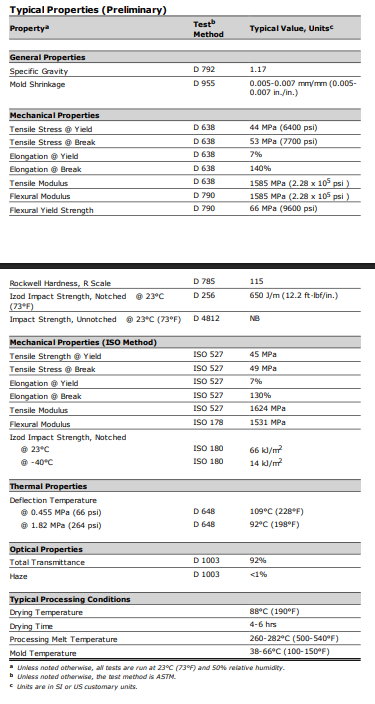

Nick –