
Description
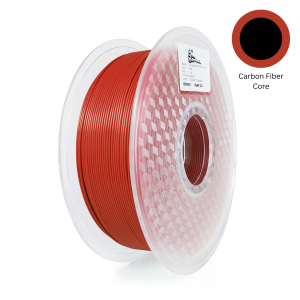
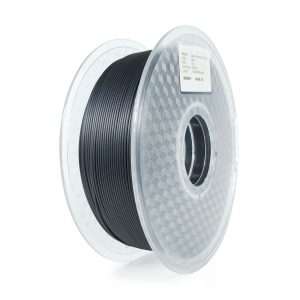
Eryone PP-CF — Carbon Fibre Reinforced Polypropylene for Demanding Applications
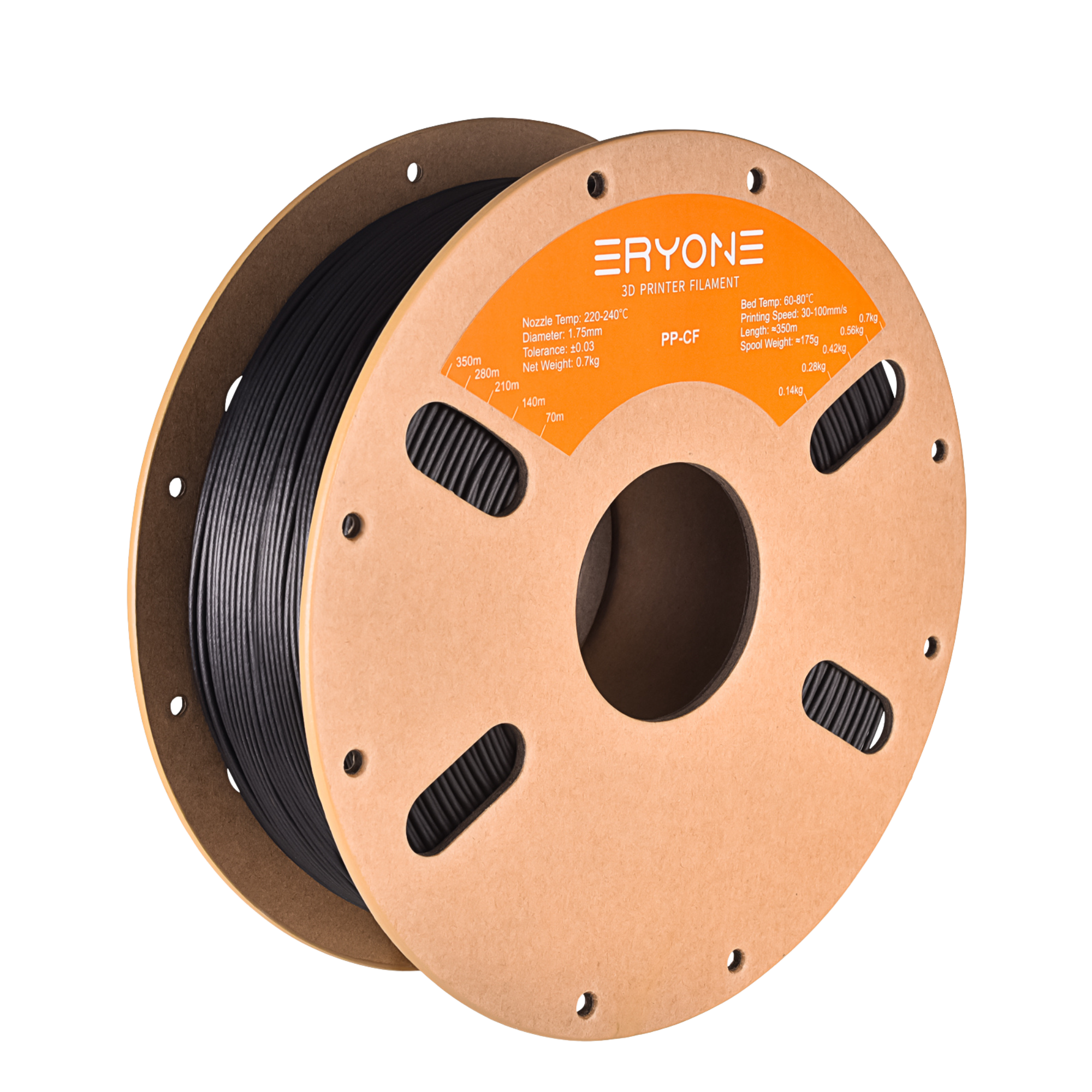
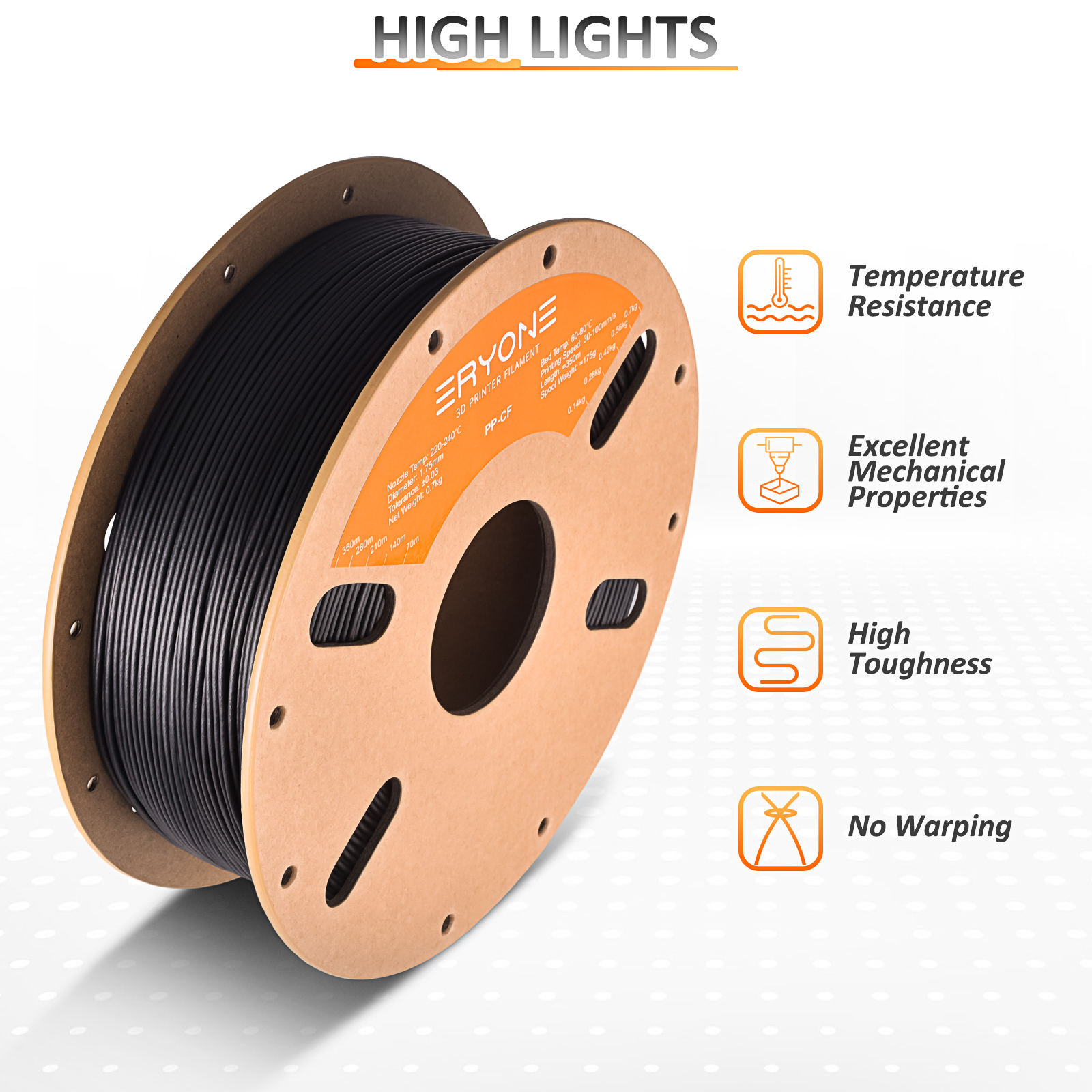
Eryone PP-CF is a 20% carbon fibre reinforced polypropylene filament that combines the chemical resistance, flexibility, and low density of PP with the stiffness and dimensional stability of carbon fibre. The result is a tough, lightweight material that resists chemicals, absorbs impacts, and holds up in environments that would degrade most other filaments.
PP-CF is the filament for applications where parts need to survive real-world abuse — automotive components, chemical-resistant housings, waterproof enclosures, and structural parts that need to be both strong and light.
Why PP-CF?
Polypropylene is one of the most widely used plastics in industry — from car bumpers to chemical containers to medical devices. It’s chosen for its unique combination of chemical resistance, fatigue resistance, and low density. Adding 20% carbon fibre to PP addresses its main weakness (low rigidity) while preserving its strengths, creating an engineering filament with a rare set of properties.
Chemical Resistance
PP is inherently resistant to acids, alkalis, solvents, fuels, and most household chemicals. Unlike PETG or nylon, which can be attacked by certain solvents, PP-CF shrugs off chemical exposure that would damage other engineering filaments.
Low Density — Lightweight Parts
At 0.95–1.01 g/cm³, PP-CF is one of the lightest engineering filaments available — lighter than PETG-CF, PA-CF, PC-CF, and even standard PLA. For weight-sensitive applications like drone components, automotive panels, and portable equipment, PP-CF saves grams without sacrificing performance.
Impact & Fatigue Resistance
PP excels where other materials crack — repeated flexing, vibration, and sudden impacts. The 25–35% elongation at break means parts bend and absorb energy rather than snapping, making PP-CF ideal for living hinges, snap-fit enclosures, and parts subject to cyclic stress.
PP-CF vs Other Engineering Filaments
PP-CF vs PETG-CF
PP-CF offers superior chemical resistance and lower weight. PETG-CF is easier to print and doesn’t require PP-specific adhesion solutions.
PP-CF vs PA-CF (Nylon Carbon Fibre)
PP-CF has better chemical resistance, far lower moisture absorption, and lower density. PA-CF offers higher tensile strength and heat resistance. PP-CF wins on chemical environments; PA-CF wins on raw mechanical performance.
PP-CF vs PPS-CF
PPS-CF handles higher temperatures (238°C vs 85°C) and is the top-tier chemical resistant filament. PP-CF is more flexible, lighter, and more affordable — the practical choice when PPS-level heat resistance isn’t needed.
Bed Adhesion — The PP Challenge
Polypropylene is notoriously difficult to stick to standard build surfaces. PP adhesive or a dedicated PP build plate is highly recommended. Standard PEI, glass, and textured surfaces will not provide reliable adhesion without surface treatment. Options include PP-specific adhesive applied to your existing build plate, a dedicated PP build plate (polypropylene sheet on your magnetic plate), and packing tape applied to the build surface (budget workaround).
This is the biggest printing challenge with PP-CF — get bed adhesion right and the rest of the print process is straightforward.
Print Settings
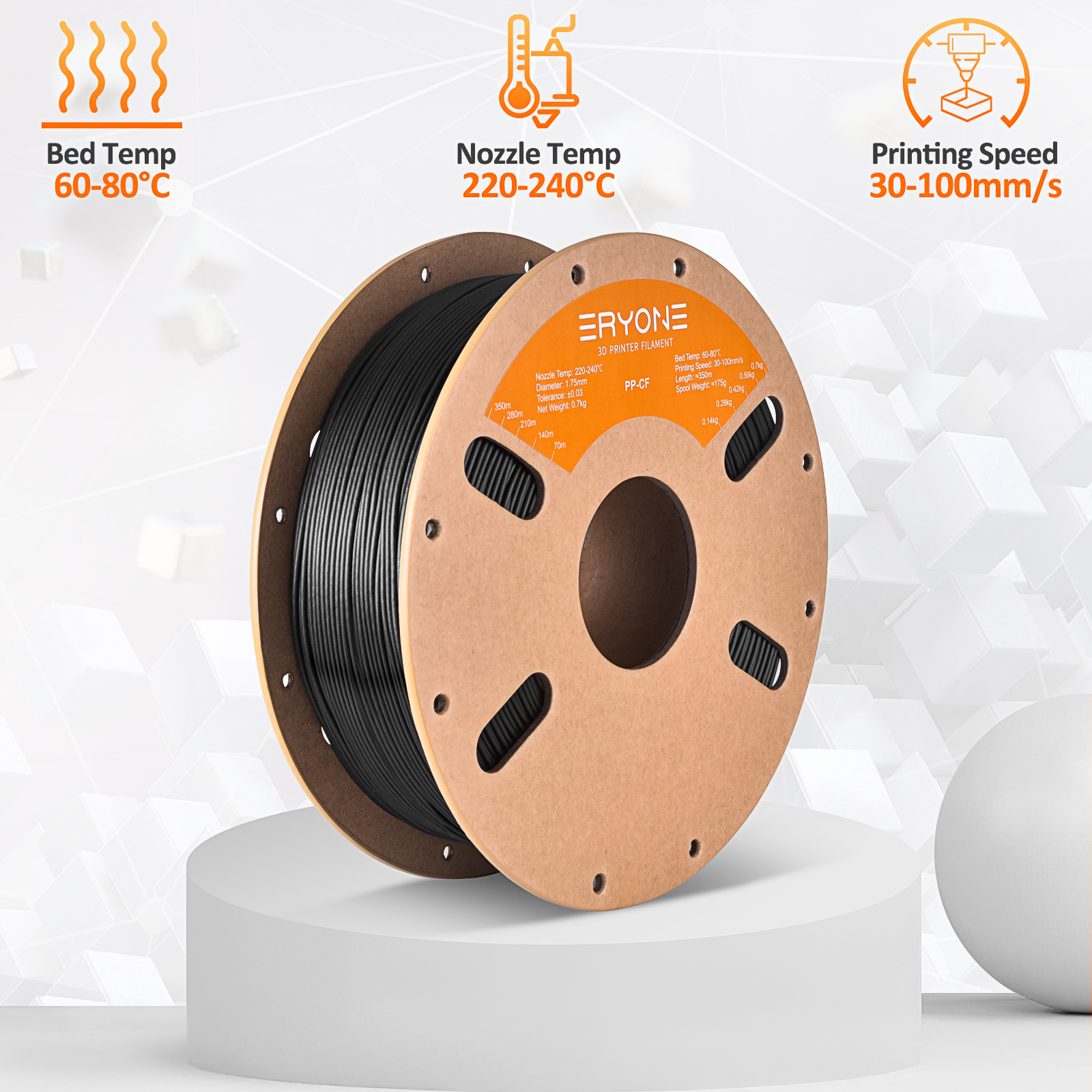
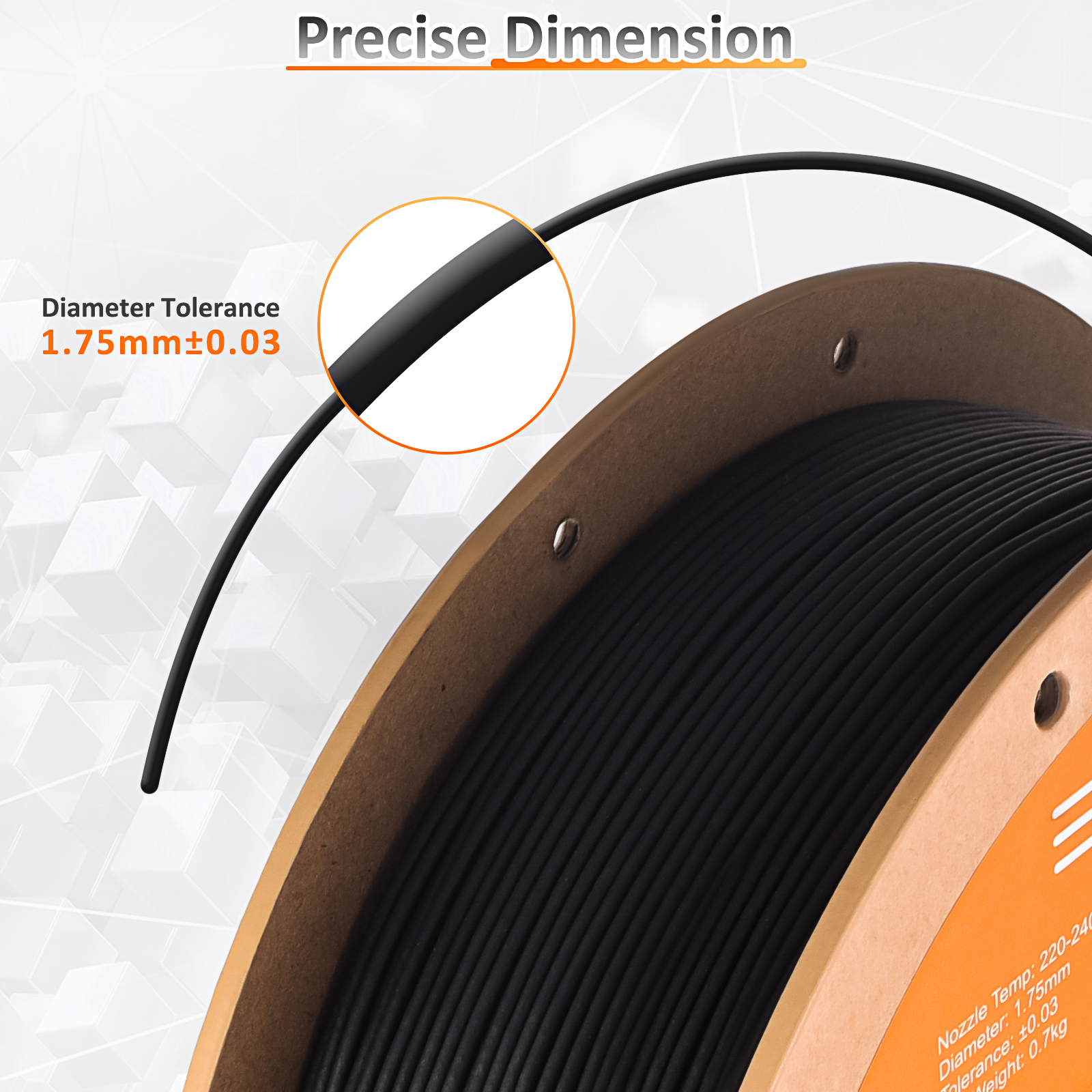
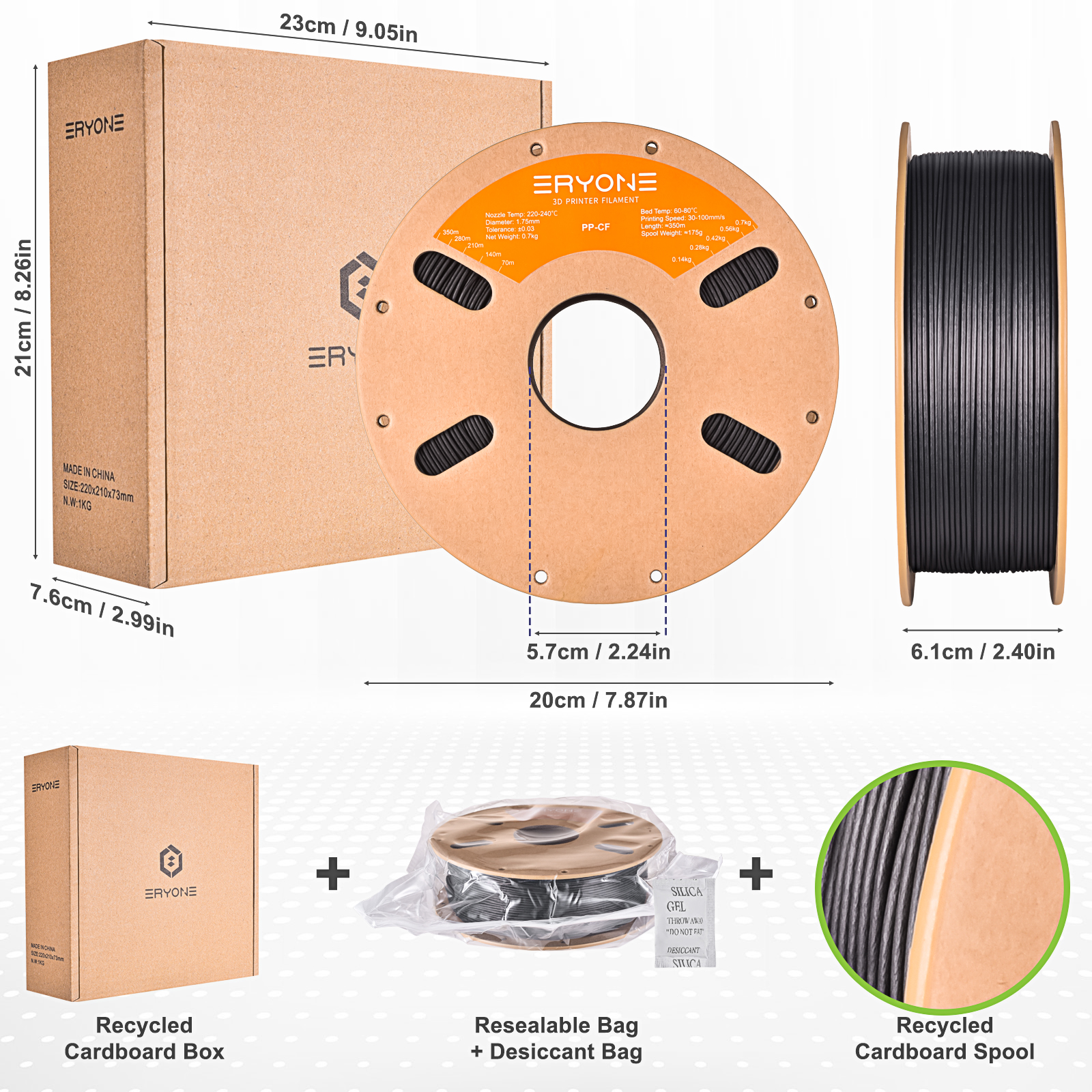
Nozzle temperature: 220–240°C
Bed temperature: 60–80°C
Print speed: 30–100 mm/s
Enclosure: required — enclosed printing recommended
Nozzle: hardened steel required — 20% carbon fibre is abrasive
Bed surface: PP adhesive or PP build plate highly recommended
Drying: 50–60°C for 8 hours before use
Applications
Automotive components — bumper brackets, interior clips, cable guides
Chemical-resistant enclosures and containers
Waterproof housings and marine components
Lightweight structural parts for drones and RC
Living hinges and snap-fit assemblies that flex repeatedly
Industrial jigs and fixtures in chemical environments
Any application requiring chemical resistance + low weight + impact toughness
Part I:Suggests Printing Parameters
| Parameter | Set up |
| Nozzle temperature | 220-240 ℃ |
| Bed temperature | 60-80℃ |
| Bed materia | glass, PEI, spring steel plate |
| Bottom printing temperature | 220-240 ℃ |
| Sealed printing | enclosed printing |
| Printing speed | 30-100mm/s |
| Drying conditions | 50-60℃, 8h |
Part II: Physical Properties of Materials
| Property | Testing Method | Unit | Typical Value |
| Density(g/cm³ at 21.5 ° C) | ASTM D792 (ISO 1183, GB/T 1033) | g/cm³ | 0.95-1.01 |
| Vicat Softening Temperature(° C) | ASTM D1525 (ISO 306 GB/T 1633) | ℃ | 55-63 |
| Heat distortion temperature(° C) | ASTM D648 1.8MPa 0.45MPa | ℃ | 85 |
| Melt Index(g/10 min) | 220 ° C, 10kg 240 ° C, 2.16 kg | g/10min | 12-15 |
Part III: Mechanical Properties of Printed Samples
| Property | Test conditions | Test standards | unit | Typical Value |
| Tensile strength X-Y | 50mm/min | GB/T 1040.4 | MPa | 50.1 |
| Elastic modulus X-Y | 50mm/min | GB/T 1040.1-2006 | MPa | 1320-1675 |
| Elongation at break X-Y | 50mm/min | GB/T 1040.4 | % | 25-35 |
Reviews
There are no reviews yet