
Description
Eryone TPU 85A — Ultra-Soft Flexibility with Industrial-Grade Durability
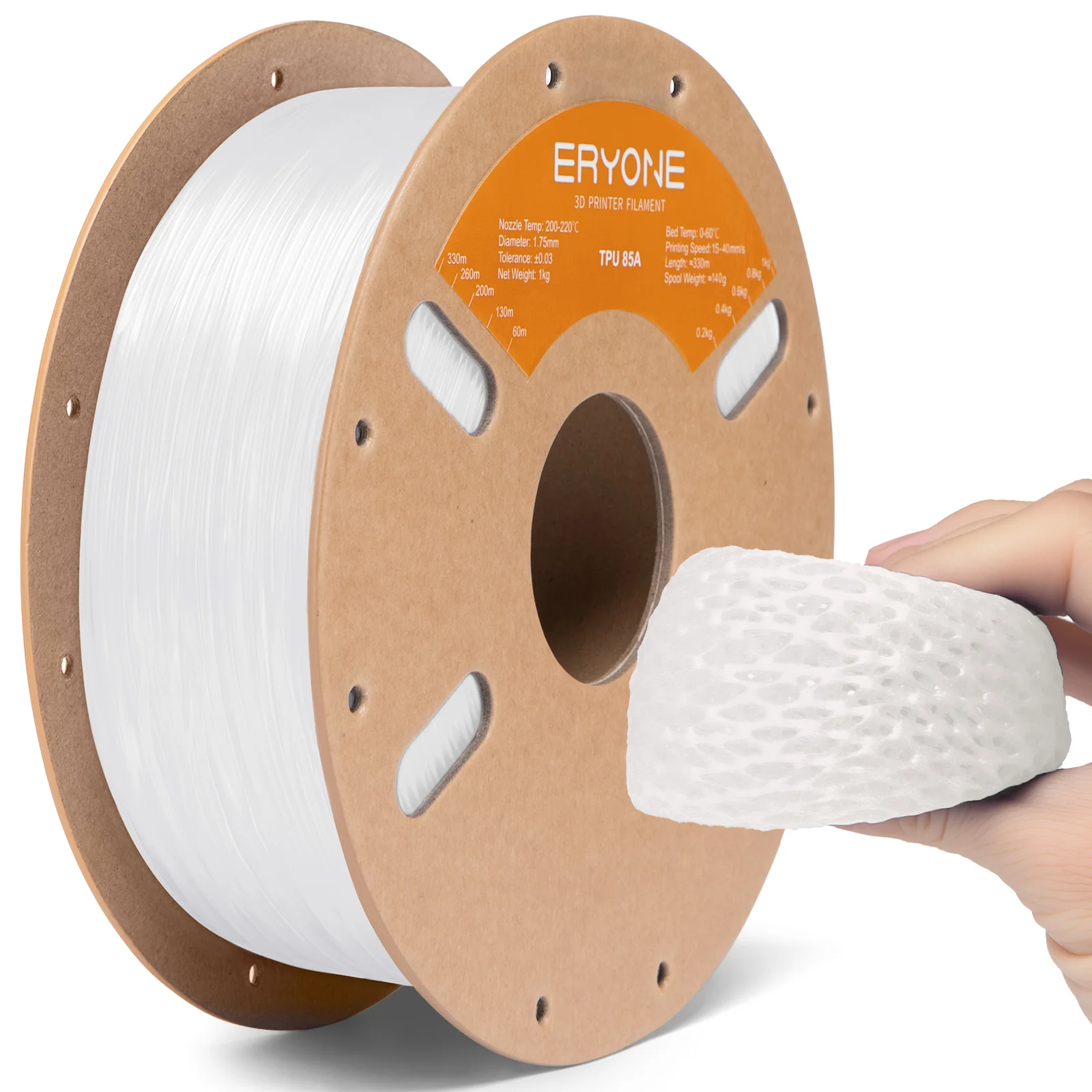
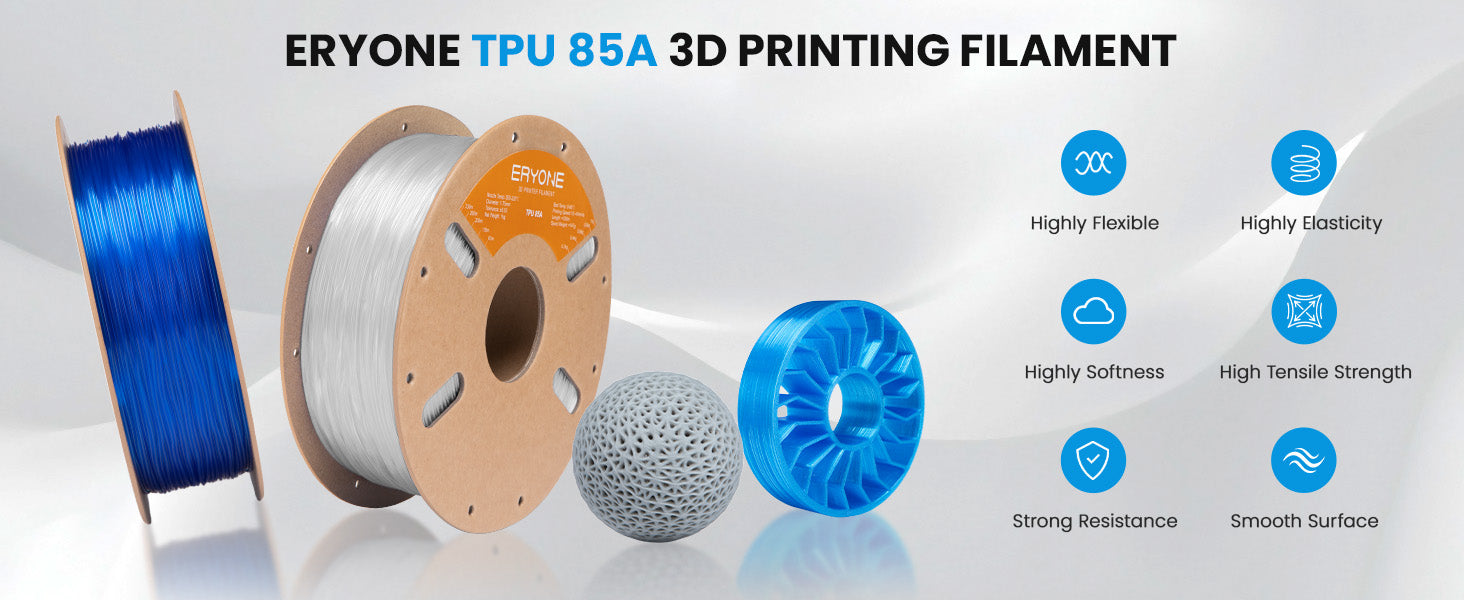
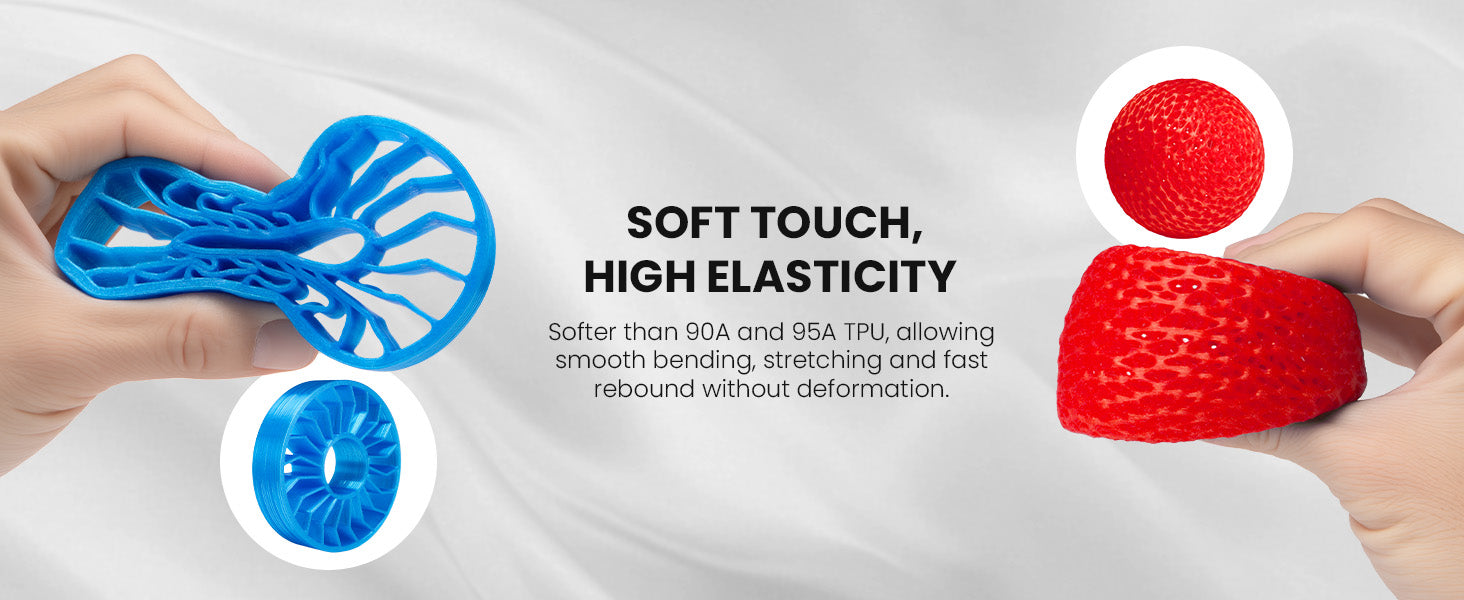
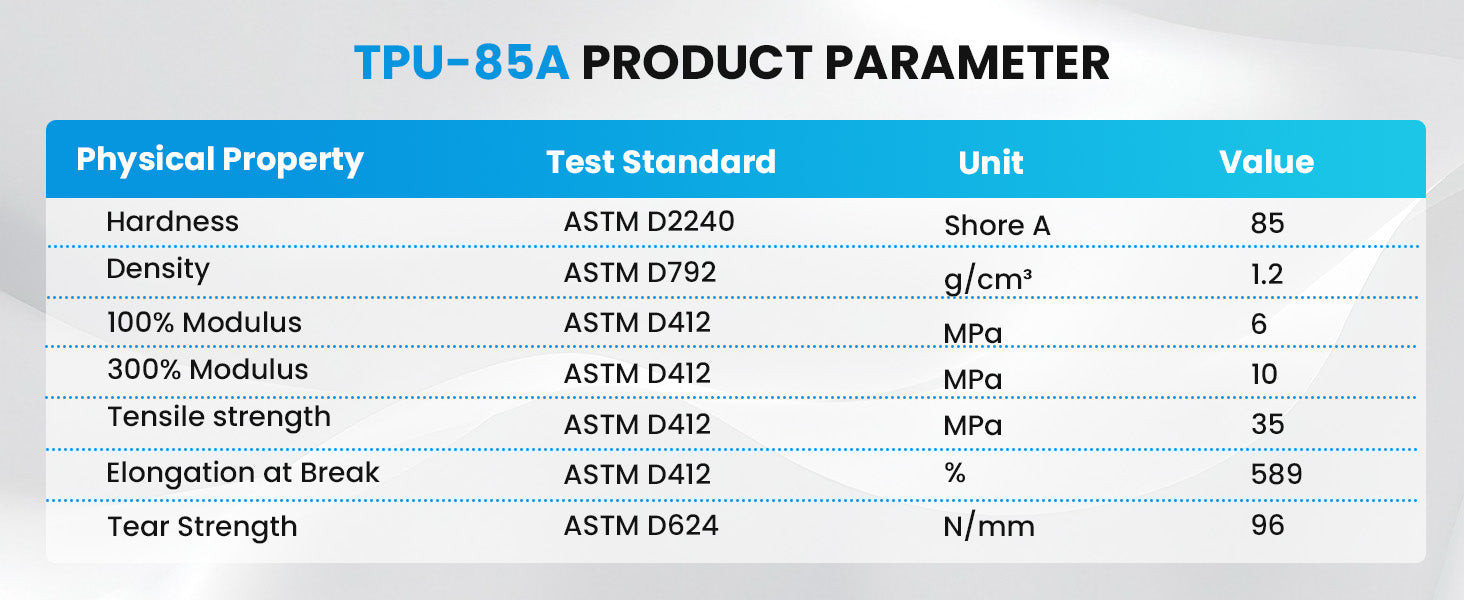
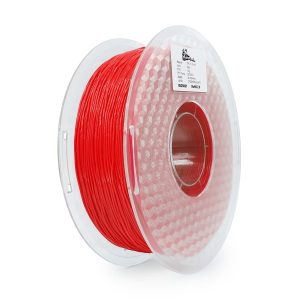
Eryone TPU 85A is a Shore 85A hardness flexible filament engineered for applications needing extreme elasticity combined with genuine structural integrity. Softer and more flexible than standard 90A or 95A TPU, it strikes the balance between soft-touch flexibility and durability — parts stretch, compress, and return to their original shape while resisting tearing and impact under repeated stress.
Softer Than 90A/95A — Why It Matters
Shore hardness measures how soft or firm a flexible material is. At 85A, this filament is noticeably softer than the more common 90A and 95A TPU grades, making it the better choice when a part genuinely needs to compress, stretch, and flex repeatedly rather than just bend slightly. If 95A TPU has felt too rigid for a project — phone cases, wearables, cushioning, or footwear components — 85A delivers the extra give those applications call for.
High Impact & Abrasion Resistance
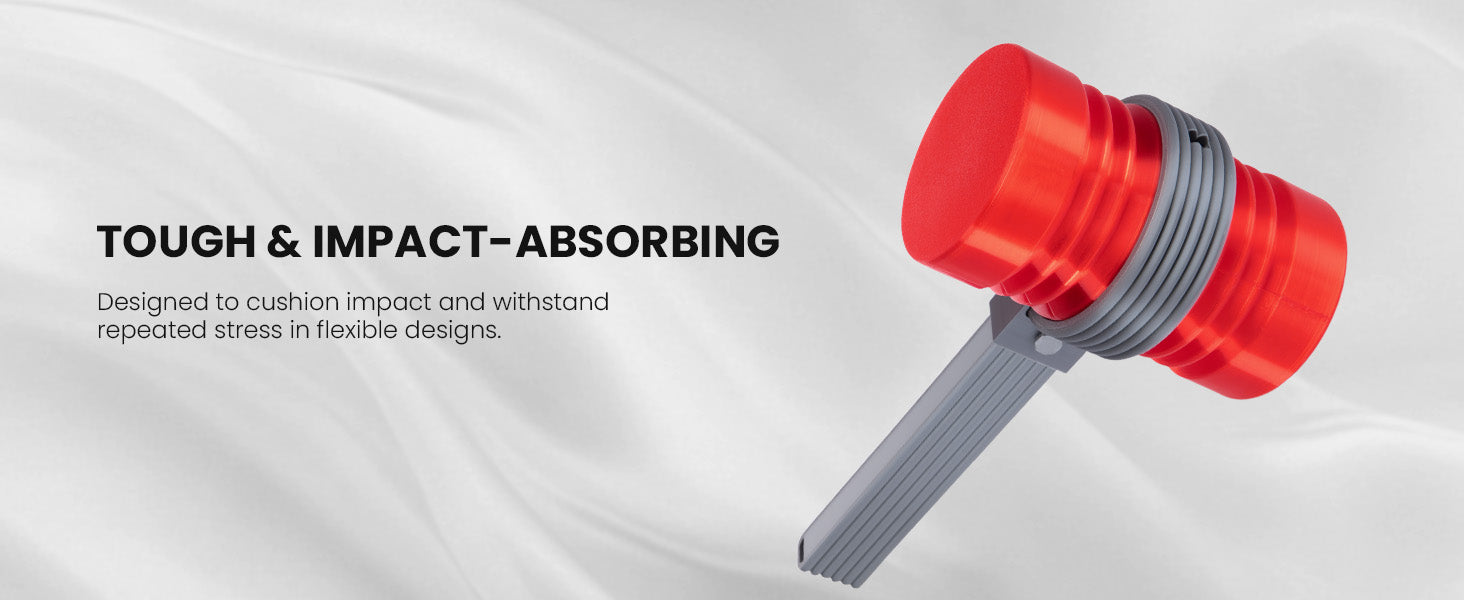
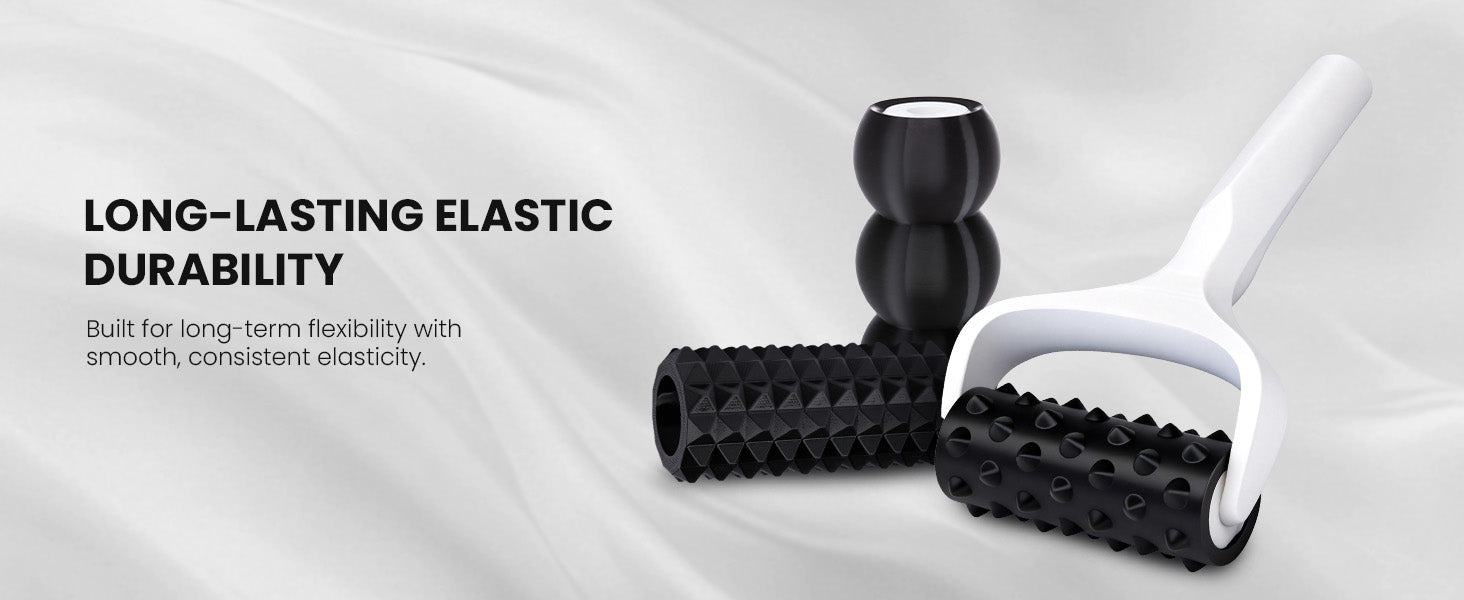
Despite its softness, this filament is virtually indestructible under normal use — resisting tearing, abrasion, and repeated impact far better than rigid filaments ever could. It’s also resistant to water, heat, and oil, extending its usefulness into outdoor, wet, and mechanical environments where a standard PLA or PETG part would degrade.
Enhanced Flow — Faster Than Standard TPU
Eryone has formulated this TPU 85A for improved melt flow compared to standard TPU 95A, enabling higher print speeds without sacrificing quality. This optimised balance of speed and consistency means less time waiting on flexible prints that would otherwise demand painfully slow speeds to avoid jamming or inconsistent extrusion.
Tight ±0.03mm Diameter Tolerance
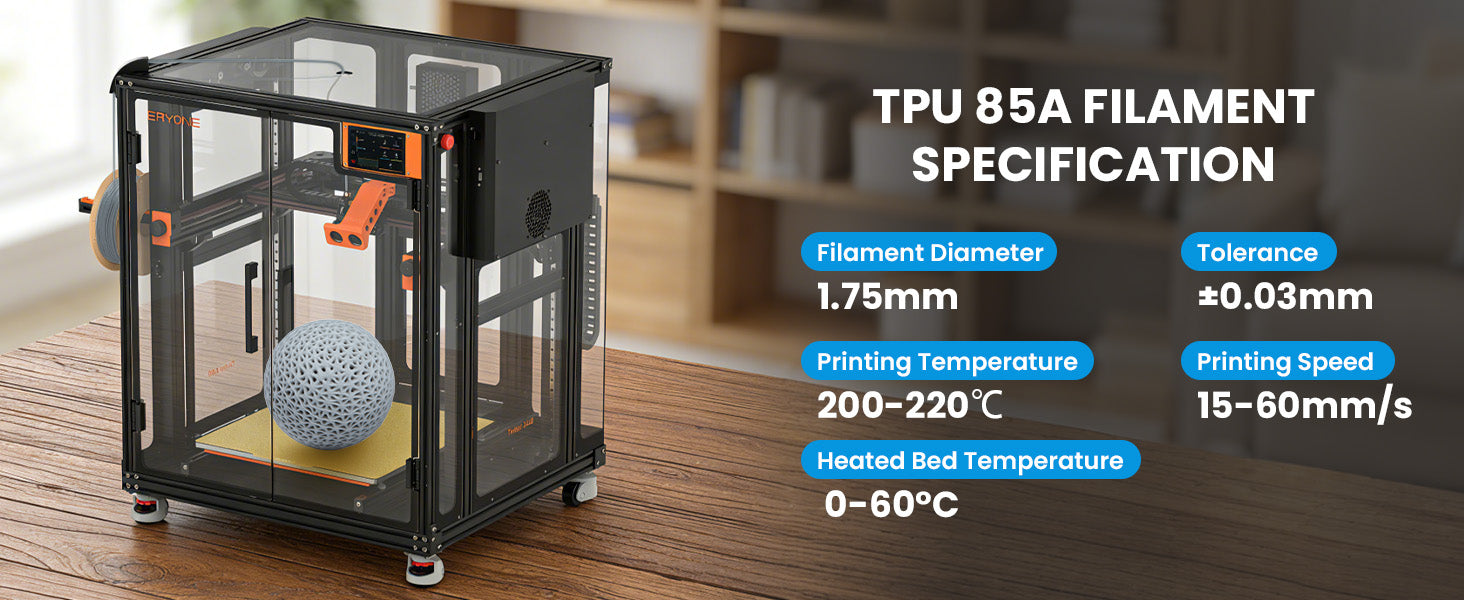
Manufactured with advanced laser measurement, this filament holds a consistent ±0.03mm diameter tolerance — significantly tighter than the ±0.05mm typical of many TPU filaments. Consistent diameter means more even extrusion flow and a reduced risk of jams, particularly important with flexible materials where diameter variation causes buckling in the feed path.
Direct Drive Strongly Recommended
Due to its higher flexibility, a direct-drive extruder is strongly recommended over bowden setups to ensure smooth extrusion and prevent filament buckling. The short filament path on direct drive printers gives the positive control that soft, flexible TPU like this genuinely needs. Bowden users can still print it, but should expect to run considerably slower and disable retraction to reduce buckling risk.
Print Settings
Nozzle temperature: 200–220°C
Bed temperature: 0–60°C
Print speed: 15–40 mm/s (direct drive); slower for bowden setups
Diameter: 1.75 mm ±0.03 mm
Retraction: minimise or disable to prevent jamming
Extruder: direct drive strongly recommended
Drying: recommended if stringing or bubbling appears — TPU is hygroscopic
Applications
Custom footwear and orthotic components
Protective gear, phone cases, and wearable devices
Cushioning, gaskets, and vibration dampeners
Flexible hinges and living joints
Industrial prototypes needing soft-touch, impact-absorbing parts
Any application where standard 95A TPU isn’t soft enough



Reviews
There are no reviews yet