material Selected

Carbon Infused PLA

Filter
Filter
Search
Categories
Colour
See more See less

Frequently Asked Questions

What Is PLA-CF (Carbon Fiber PLA)?

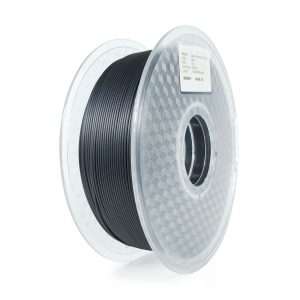
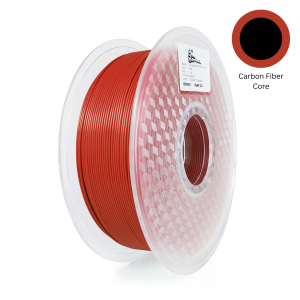
PLA-CF is standard PLA infused with short carbon fibre strands, giving it significantly increased stiffness and a matte, speckled black finish. It combines the easy printability of PLA with much better rigidity, making it popular for parts that need to hold their shape without flexing.

Is PLA-CF Stronger Than Standard PLA?

PLA-CF is significantly stiffer and more dimensionally stable than standard PLA, resisting bending and warping better under load. It’s not necessarily tougher in terms of impact resistance, and can be more brittle, so it’s better suited to rigid structural parts than anything that needs to absorb shocks.

Do I Need A Special Nozzle To Print PLA-CF?

Yes, a hardened steel nozzle is strongly recommended. The carbon fibre content is abrasive and will wear through a standard brass nozzle quickly, widening the orifice over time and affecting print accuracy.

What Temperature Should I Print PLA-CF At?

Most PLA-CF prints between 200–225°C on the nozzle, with a bed temperature of 45–60°C, similar to standard PLA but often slightly hotter. Check the specific product listing for the manufacturer’s recommended settings, and consider a larger nozzle diameter (0.6mm or above) to reduce clogging risk from the fibres.

What Is PLA-CF Best Used For?

PLA-CF suits rigid functional parts, drone frames, tooling, jigs, and fixtures where stiffness and dimensional accuracy matter more than flexibility or impact resistance. It’s also popular for its distinctive matte black, low-warp aesthetic on visible mechanical parts.

Does PLA-CF Warp Like Other Engineering Filaments?

No, PLA-CF retains PLA’s low-warp characteristics and doesn’t need a heated enclosure, making it much easier to print than carbon-fibre versions of ABS, PETG, or nylon.

How Should I Store PLA-CF Filament?

Like standard PLA, it’s hygroscopic and will absorb moisture from the air over time, which can affect surface finish and layer adhesion. Store opened spools in a dry environment and use a filament dryer if print quality drops after extended exposure to humid air.