Description
Miniware TS100 / TS101 Soldering Iron Tips
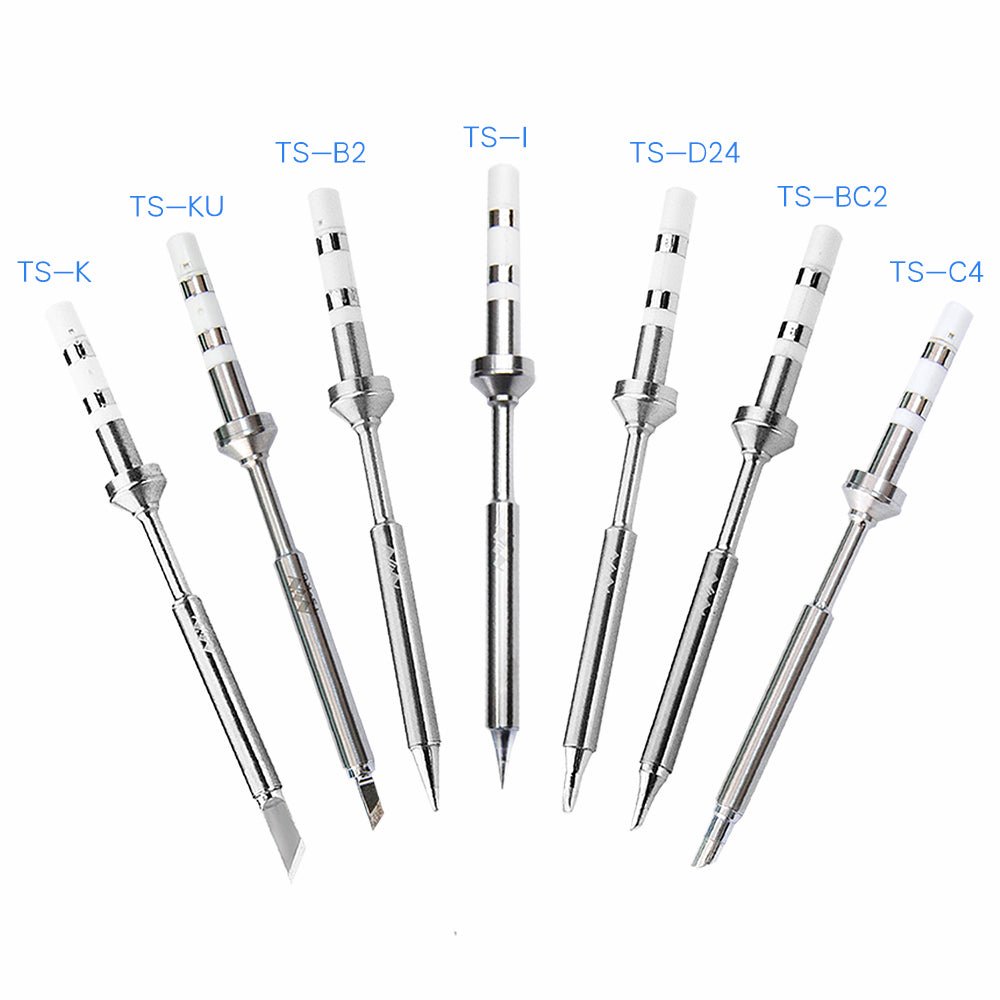
Replacement tips for the Miniware TS100 and TS101 soldering irons, in seven styles to suit everything from fine electronics work to heavy joints. They also fit other irons that use the same tip standard, including the Pinecil.
A worn or oxidised tip is the most common reason an iron stops soldering well. Fitting a fresh tip, or the right shape for the job, makes joints faster to flow and cleaner to finish.
Built for Heat Transfer and Durability
Each tip combines stainless steel with a red copper core. The copper moves heat to the working end quickly and evenly, while the stainless steel body gives the tip the strength to hold up under sustained high-temperature use. The compact profile also gives you finer control than a bulky conventional tip.
Choose Your Tip
Tips are sold individually, so you can pick the style that matches your work or build a small set.
I Tip
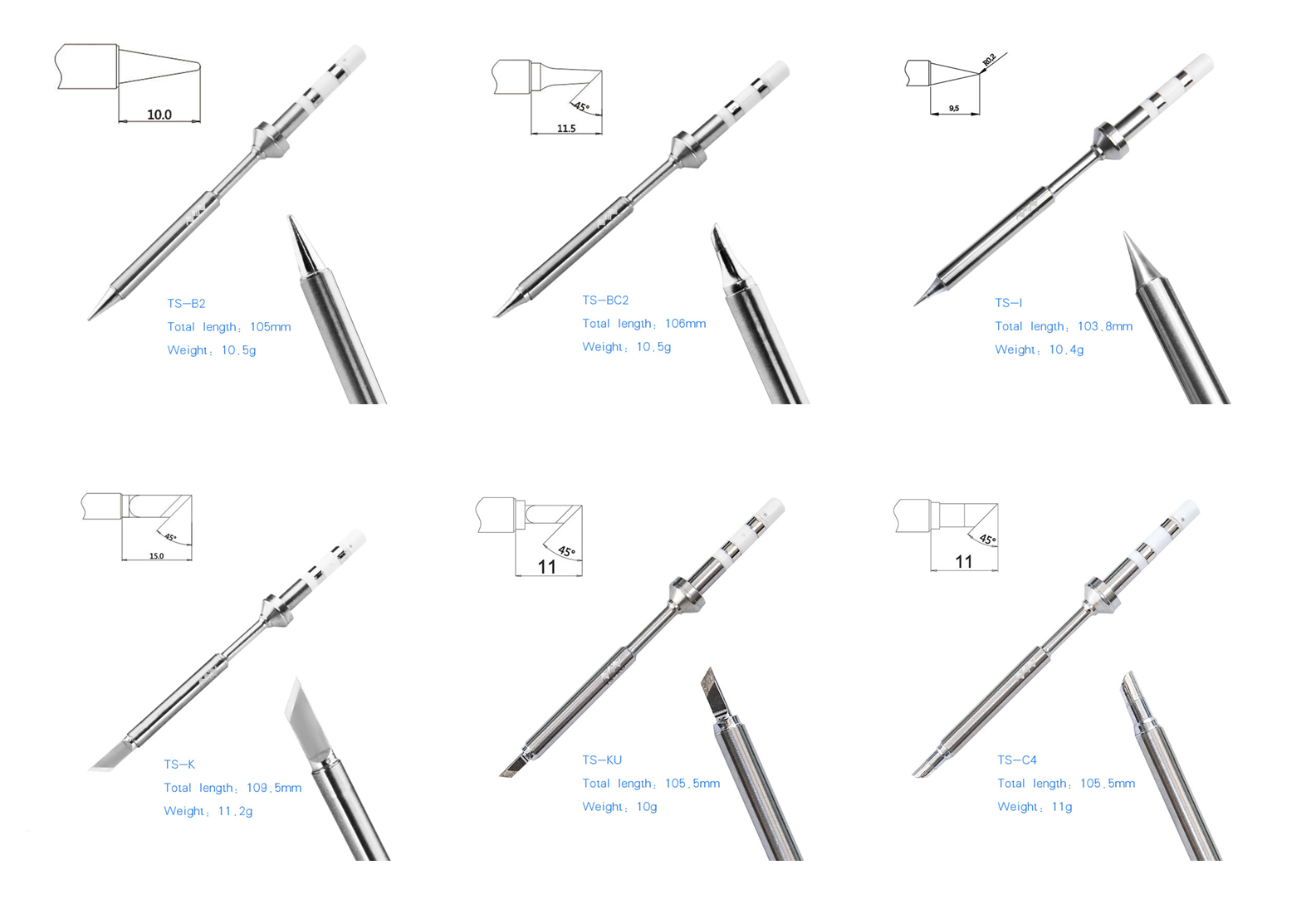
A narrow, long tip for small, delicate jobs and tight spaces.
K Tip
A large blade tip that spreads heat well. A good choice for jobs in awkward spots and for larger pads.
KU Tip
A smaller version of the K tip, for when you want the blade shape with a bit more finesse.
B2 Tip
The standard conical tip. A good all-rounder for general soldering and the one to start with if you’re unsure.
D24 Tip
A small flat tip, like a miniature flat-head screwdriver. Handy for drag soldering and working along rows of pins.
BC2 Tip
Cone-shaped with an angled flat face. It gives you the control of a conical tip with extra surface area for heat transfer.
C4 Tip
A large snub-nosed tip for jobs that need more solder and more heat, such as bigger joints and heavy wire.
Compatibility
Miniware TS100
Miniware TS101
Pinecil and other irons that use the same tip standard
Check that your iron uses the TS100-style tip before ordering. The TS80 and TS80P use a different tip.
Tip Care
Keep the tip tinned with a thin layer of solder when you’re not using it, and wipe it on a damp sponge or brass wool, not by scraping it. Don’t leave it sitting at full temperature unused, since that speeds up oxidation and wear.
Great For
Electronics assembly and repair
Printer wiring and connector work
Fine pitch and delicate joints
General hobby and workshop soldering
Replacing a worn or damaged tip

Reviews
There are no reviews yet