Description
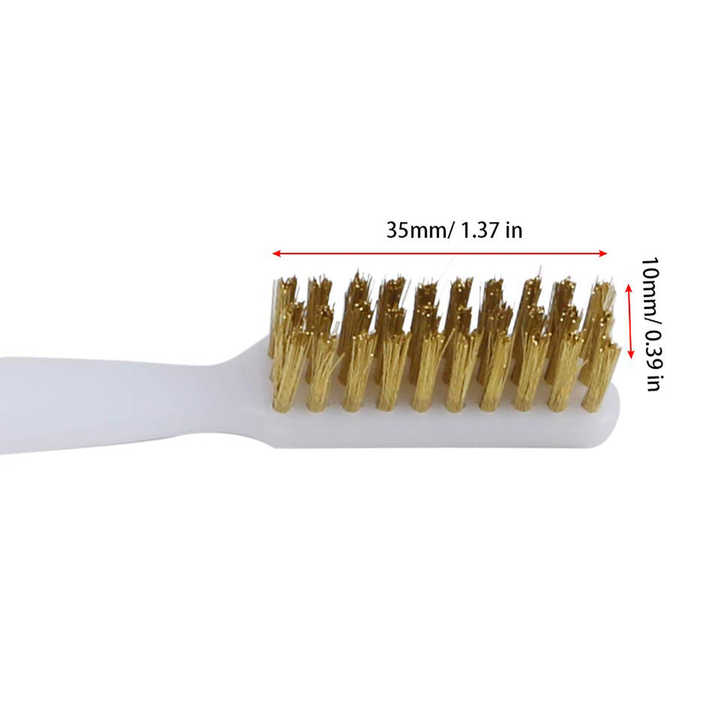
Brass Brush — Clean Your Nozzle Without Damaging It
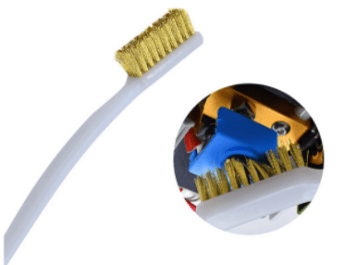
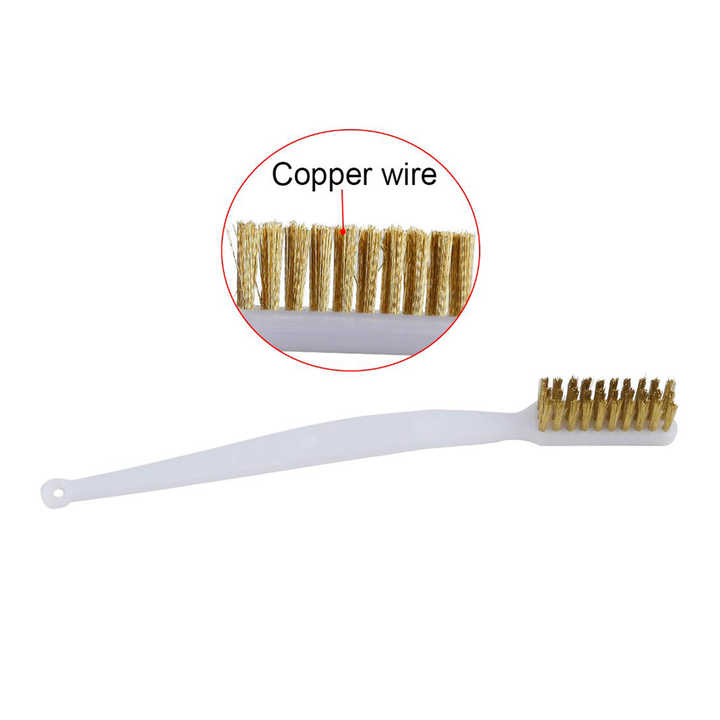
A brass brush is the safe way to clean filament buildup, blobs, and carbonised residue from your 3D printer’s nozzle and hotend exterior. Brass is softer than steel, hardened steel, and nozzle coatings — so it scrubs away stuck-on filament without scratching or damaging the nozzle surface. A steel wire brush would score the nozzle, creating rough spots where filament sticks even more. Brass cleans without causing the problem it’s solving.
At $2.99, it’s one of the cheapest and most useful tools you can add to your printer toolkit.
When to Use a Brass Brush
Before every print — a quick wipe of the heated nozzle removes any residual filament blob from the tip, preventing it from dragging across your first layer. After filament changes — clears residue from the previous material. During maintenance — scrubs carbonised buildup from the nozzle exterior and heat block. After a failed print — removes stuck filament from around the nozzle and silicone sock area.
How to Use
Heat the nozzle to printing temperature. Gently brush the nozzle tip and sides with the brass brush to remove softened filament buildup. The heat softens the residue and the brass bristles scrub it away cleanly. Work around the entire nozzle — tip, sides, and where the nozzle meets the heat block.
Do not brush a cold nozzle aggressively — heat it first so the filament softens and releases easily.
Why Brass, Not Steel?
Brass (Mohs ~3) is softer than hardened steel nozzles (Mohs ~6+), standard steel nozzles, and nozzle coatings like EndCoat™. This means it cleans effectively without scratching or removing protective coatings. A steel wire brush would damage nozzle coatings and score the surface, creating micro-scratches that attract more filament buildup over time.
What’s Included
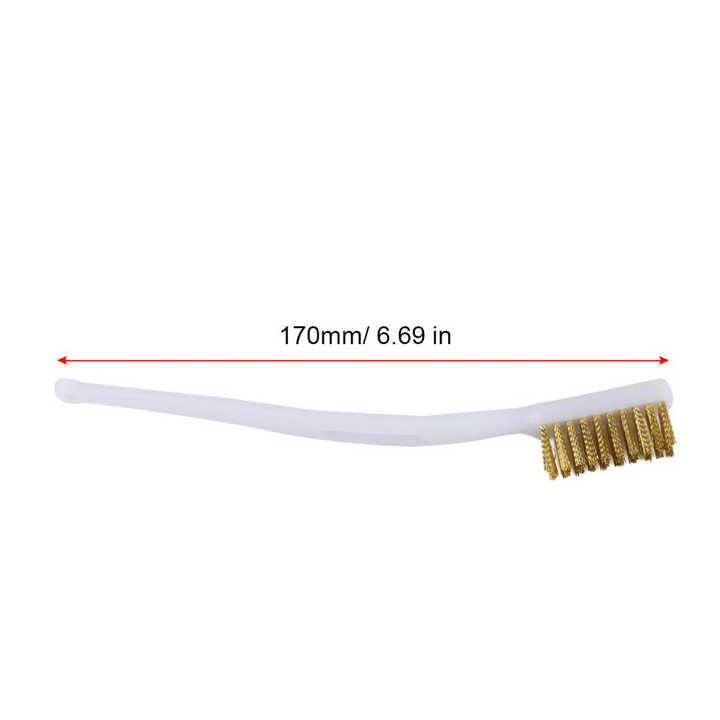
Brass brush × 1

Jeff Bradley –
James G. –