Frequently Asked Questions
What Is PLA Filament Made From?
PLA (polylactic acid) is a biodegradable thermoplastic made from renewable plant starches such as corn or sugarcane, rather than petroleum. It’s one of the most widely used 3D printing filaments thanks to its ease of use and lower environmental impact compared to petroleum-based plastics.
Is PLA The Easiest Filament To Print With?
Yes. PLA prints at a low temperature, warps minimally, and doesn’t require a heated enclosure or an all-metal hotend, making it the standard starting material for beginners and one of the most reliable filaments for everyday printing.
What Temperature Should I Print PLA At?
Most PLA prints well between 190–220°C on the nozzle, with a bed temperature of 45–60°C, though exact settings vary by brand and colour additive. Check the specific product listing for the manufacturer’s recommended settings, and run a temperature tower when dialling in a new roll.
Do I Need A Heated Bed Or Enclosure To Print PLA?
A heated bed isn’t strictly required but helps with adhesion, especially on larger parts. An enclosure isn’t necessary for standard PLA since it doesn’t warp the way ABS or ASA does, making it suitable for open-frame printers.
How Strong Is PLA Compared To Other Filaments?
PLA is rigid with good tensile strength, making it well suited to models, prototypes, and decorative parts. It’s more brittle than PETG or ABS and less heat resistant, so it isn’t the best choice for parts under continuous mechanical stress or exposed to heat above roughly 60°C.
What’s The Difference Between Standard PLA, PLA+, And Specialty PLA?
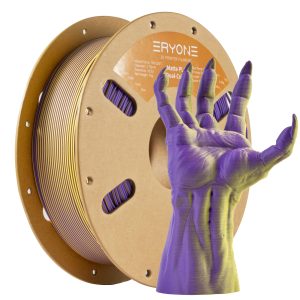
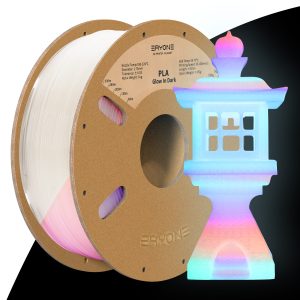
Standard PLA and PLA+ share the same easy-print profile, with PLA+ typically offering improved layer adhesion and impact resistance. Specialty variants like silk, matte, glow-in-the-dark, and rainbow PLA use the same base polymer with additives for finish or visual effects, and may need small tweaks to temperature or speed for best results.
Can PLA Be Used Outdoors?
PLA isn’t recommended for long-term outdoor use. It softens at relatively low temperatures and can degrade with prolonged UV and moisture exposure, so PETG or ASA is a better choice for parts that will live outside or in a hot car.
How Should I Store PLA Filament?
PLA is hygroscopic and will absorb moisture from the air over time, which can cause stringing, brittleness, and poor surface finish. Store opened spools in a dry environment and use a filament dryer or dry box if print quality drops or the filament has been exposed to humid air for an extended period.