
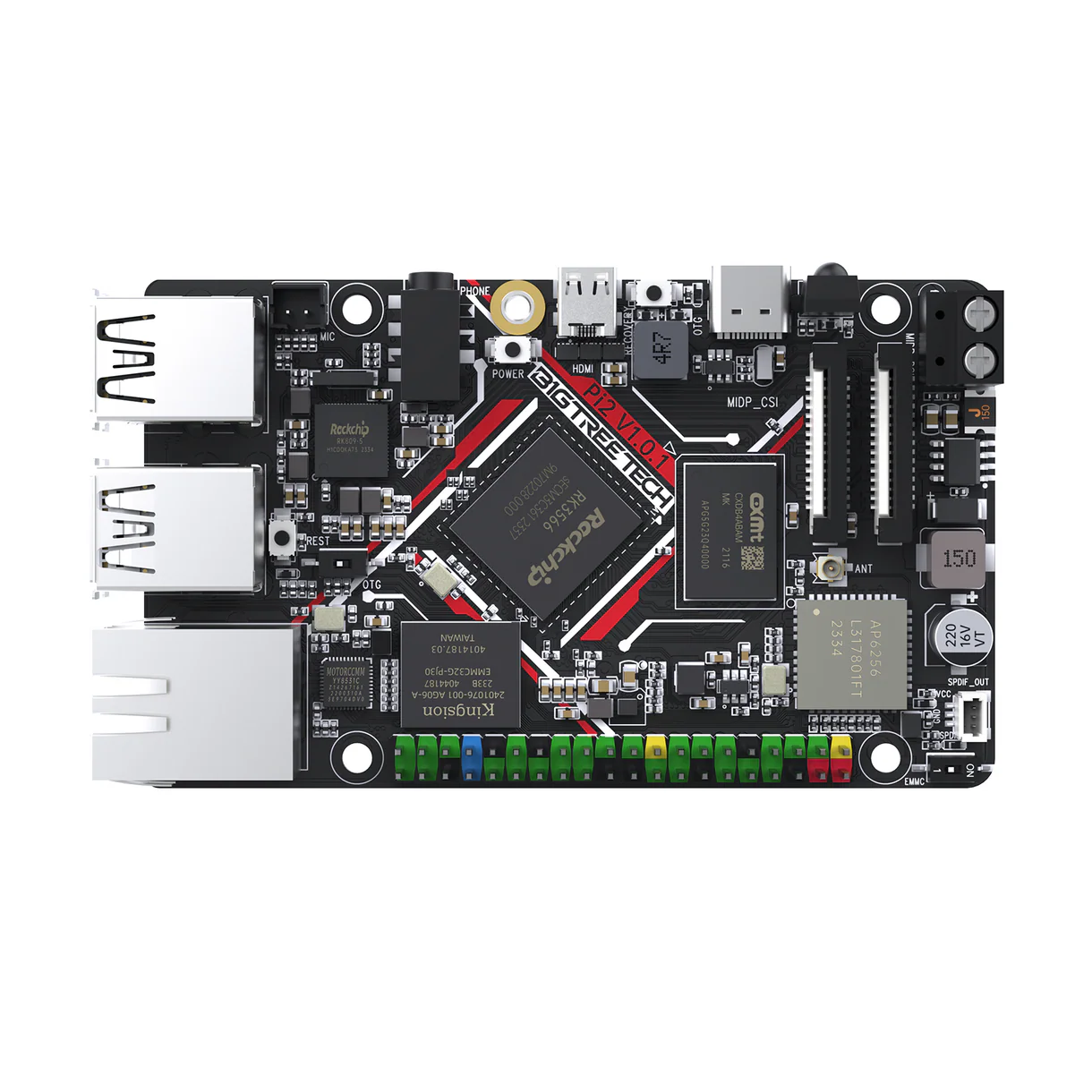
The BIGTREETECH CB2 and Pi 2 are compact single-board computers designed specifically for running Klipper firmware on 3D printers. Powered by a Rockchip RK3566 quad-core processor with 2GB LPDDR4 RAM and 32GB onboard eMMC storage, they deliver the processing power Klipper needs for fast, responsive printer control — including input shaping, pressure advance, and multi-stepper coordination.
Unlike a Raspberry Pi, these boards are purpose-built for 3D printer use. They accept direct 12V/24V power from your printer’s PSU without an adapter, include optimised I/O for printer peripherals, and come with enough onboard storage to run Klipper, Mainsail/Fluidd, and store time-lapse footage without needing an SD card.
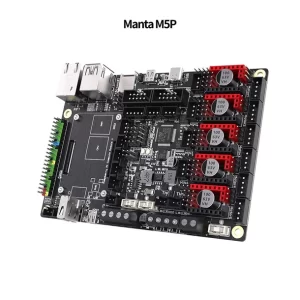
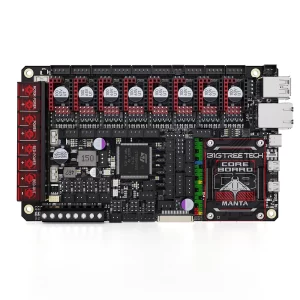
CB2 ($79.99) — A compute module that plugs into a compatible carrier board like the BIGTREETECH Manta M8P v2.0 or Manta M5P. This gives you a single integrated board combining the mainboard and host computer. Choose the CB2 if you’re building a new Klipper setup or upgrading an existing Manta-based system.
Pi 2 ($89.99) — A standalone single-board computer in a form factor similar to the Raspberry Pi 4B (slightly longer). It connects to your printer mainboard via USB, just like a Raspberry Pi would. Choose the Pi 2 if you want a standalone host that works with any Klipper-compatible mainboard, or if you’re replacing a Raspberry Pi in an existing setup.
Processor: Rockchip RK3566 quad-core ARM Cortex-A55
RAM: 2GB LPDDR4
Storage: 32GB eMMC onboard (also supports SD card and M.2 SSD expansion)
Wi-Fi: Dual-band 802.11ac (Wi-Fi 5)
Bluetooth: 5.2
Ethernet: Gigabit
USB: USB 3.0 + USB 2.0
Video: HDMI output
Camera: DSI and CSI interfaces
Power: Direct 12V/24V input from printer PSU (no adapter needed)
Both the CB2 and Pi 2 run Debian Linux and are optimised for Klipper firmware with web interfaces like Mainsail and Fluidd. The 32GB eMMC provides fast, reliable storage — no more corrupted SD cards. The dual-band Wi-Fi and Gigabit Ethernet ensure stable remote access for monitoring prints, uploading files, and managing your printer from anywhere on your network.
The Pi 2 does not have an SPI interface. If you need SPI for a display, connect via IO2 CAN, EBB, or U2C instead.
The Pi 2 is slightly longer than a Raspberry Pi 4B — check the dimensional drawings before mounting in an existing Pi enclosure.
The CB2 uses a different form factor to the CB1. The CB1 heatsink is not compatible with the CB2, and the CB2 can operate without a heatsink.


| Weight | .5 kg |
|---|---|
| Dimensions | 20 × 20 × 10 cm |
| Brand[For 3D Printer Parts- (Required)] | BQ |
| Variant: | CB2, Pi 2 |
Reviews
There are no reviews yet