
Description
Prusa Pro HT90 — The Only 3D Printer an Engineer Needs
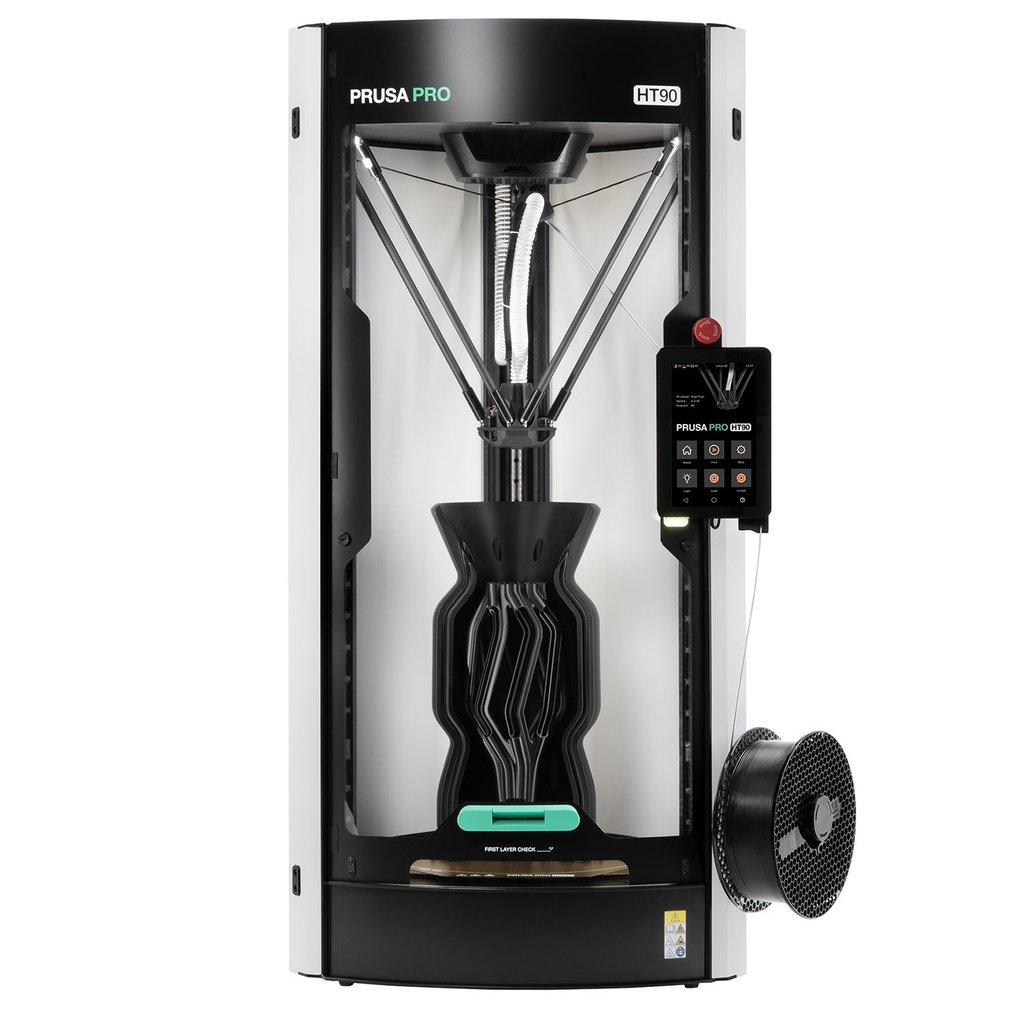
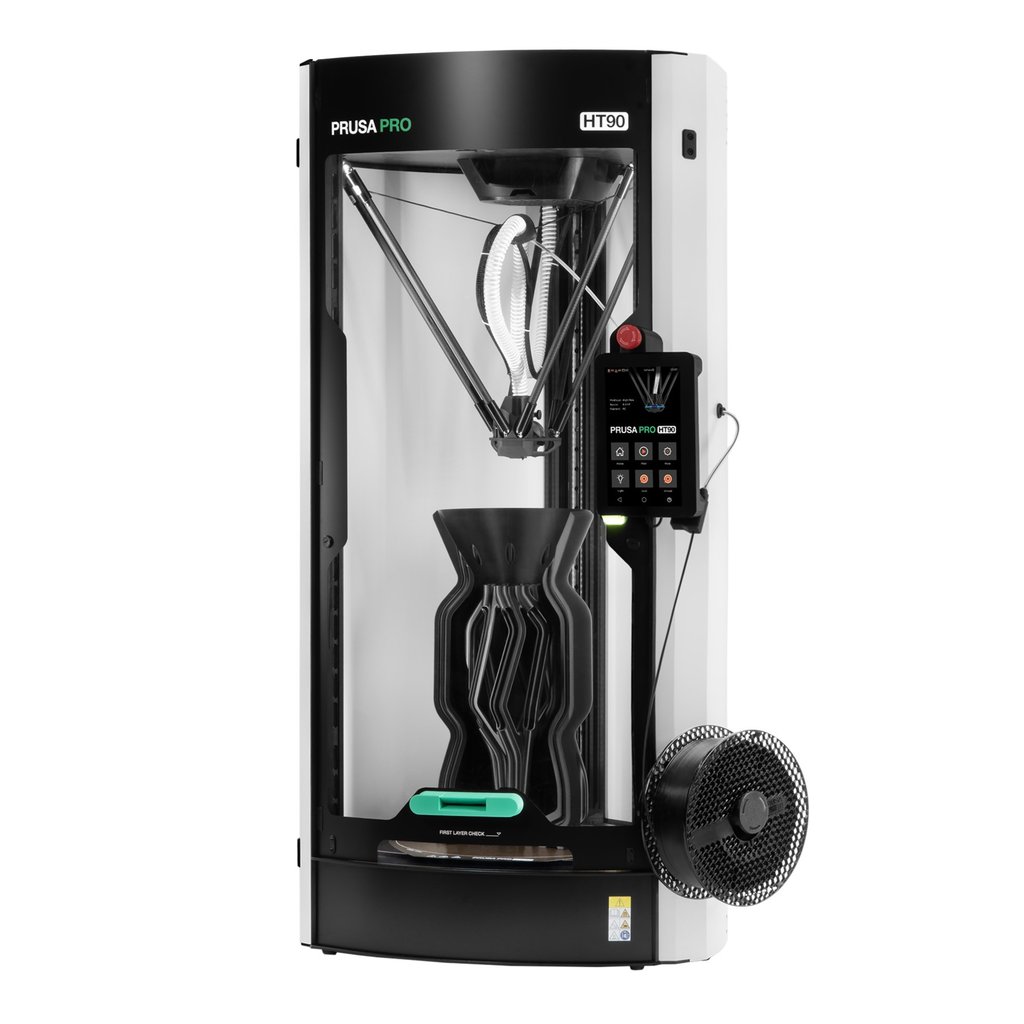
The Prusa Pro HT90 is a delta kinematics 3D printer built around one capability that most desktop machines simply can’t offer: a fully enclosed chamber that actively heats to 90°C. That single feature unlocks an entire class of engineering materials — PEEK, PEKK, PPS, PSU, and PEI (Ultem) — that have traditionally required industrial machines costing several times more.
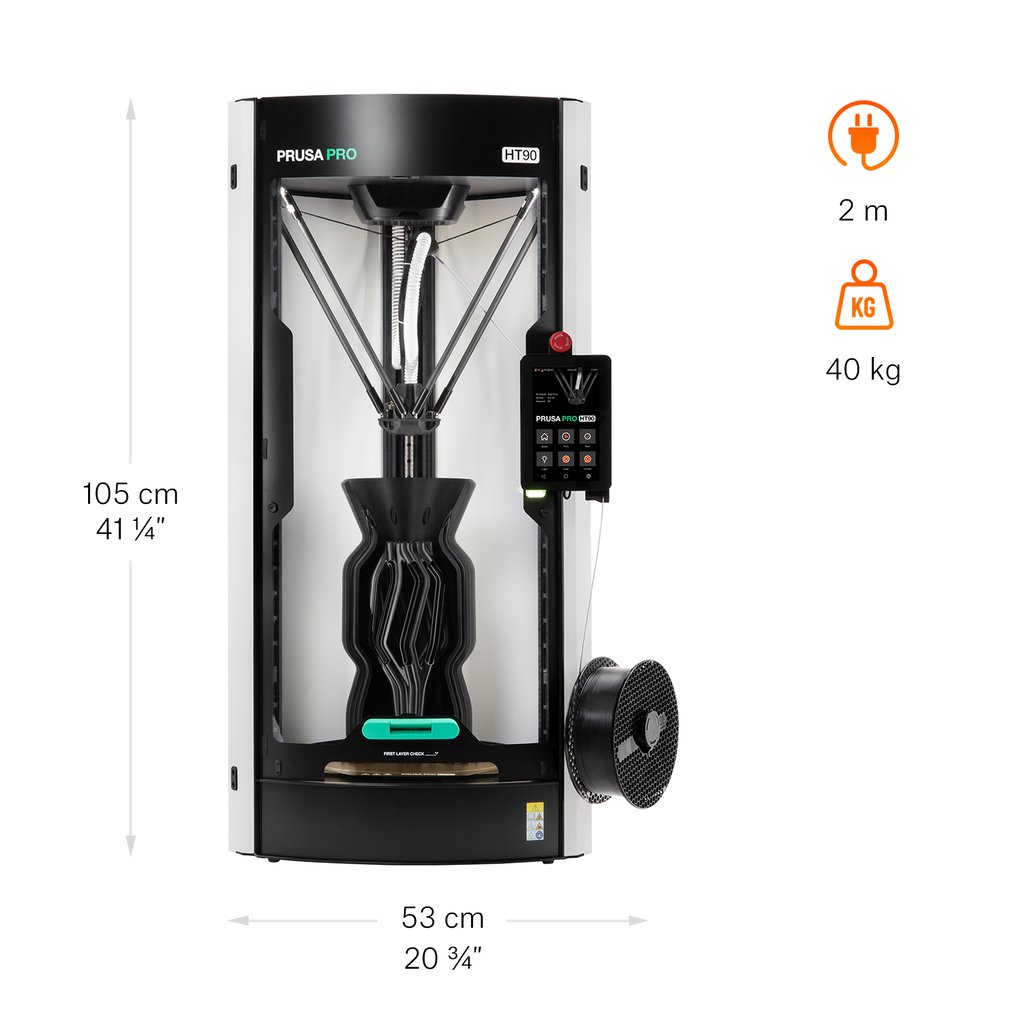
With a cylindrical Ø300 × 400mm build volume (28 litres), swappable print heads reaching up to 500°C, and delta kinematics capable of 20,000 mm/s² acceleration, the HT90 is Prusa’s first entry into genuinely industrial-grade FDM printing — while remaining a desktop machine designed and manufactured in the EU.
90°C Actively Heated Chamber
Warping, layer delamination, and internal stress in engineering materials are almost always caused by uneven cooling as a part is printed. The HT90’s actively heated chamber maintains a stable, uniform thermal environment throughout the entire print — eliminating the thermal gradients that cause these failures. This matters most for high-performance polymers that demand it, but it also significantly improves results with mid-range materials like ABS, ASA, PA, and PC-CF, which print more reliably with reduced thermal stress even when a heated chamber isn’t strictly required.
Two Swappable Print Heads
High-Flow Head
Quick-swap 0.4mm Revo nozzle, heats up to 300°C, delivers up to 40 mm³/s maximum flow rate. Ideal for fast prototyping in PLA, PETG, ASA, ABS, PA, PC, PVA, and TPU — the HT90 can lay down 1KG of PETG or ABS in around 8 hours.
High-Temp Head
Abrasion-resistant quick-swap Revo nozzle (0.25–0.8mm available), heats up to 500°C. Purpose-built for PEEK, PEKK, PPS, PSU, PES, and PEI (Ultem) — engineering-grade thermoplastics that can replace metal components at a fraction of the weight.
Both heads are magnetically mounted — detach from the arms, unplug the cable at the top of the printer, and swap in the other head in seconds. No tools, no recalibration hassle.
Delta Kinematics — A Different Kind of Precision
Unlike Cartesian or CoreXY printers that move the toolhead along fixed linear axes, the HT90 uses three coordinated arms to control toolhead movement while the object remains stationary. This lightweight, fast-moving system bypasses many of the surface artefacts common to gantry-based printers, delivering smoother, more dimensionally consistent surfaces — while also enabling the HT90’s headline speeds of up to 600 mm/s travel and 250 mm/s print speed.
Real-Time Airflow Management
A side-mounted print fan forces air through a tube directly into the lightweight print head, where a high-speed servo flap redirects airflow to precise areas of the model within milliseconds — faster than any conventional cooling fan. This enables clean overhangs and bridging without overcooling the rest of the print. An automatic intake flap also manages chamber temperature for lower-temp materials like PLA and PETG, so you can print them with the chamber closed too.
HEPA + Carbon Filtration
A closed-loop air recirculation system with HEPA and carbon filtration keeps the chamber free of ultra-fine particles released during high-temperature printing — making the HT90 suitable for use in standard indoor workspaces, labs, and offices, not just industrial floors with dedicated ventilation.
Automatic First-Layer Calibration
A precise Loadcell sensor measures nozzle-to-bed distance at the start of every print and applies the necessary offset automatically — critical when working with costly high-performance filaments like PEEK and Ultem, where a failed first layer means wasted material and wasted time. The HT90 also performs thermal model calibration and PID tuning at common printing temperatures as part of its startup routine.
Built for Engineering & Industrial Use
Applications
Engineering and R&D functional prototypes in PEEK, PA-CF, or PPS that need to survive real operating conditions, medical device components requiring biocompatible, autoclave-sterilisable materials such as PEEK and PEI, automotive and aerospace prototyping where parts must meet genuine thermal and mechanical requirements, industrial tooling — jigs, fixtures, and end-of-arm tooling in heat-resistant polymers, and rugged PPE and industrial shielding printed in ASA and PA11 for exceptional impact strength.
Data Security
The HT90 supports fully offline operation for maximum privacy, or secure remote monitoring via Prusa Connect when needed. Designed and manufactured in the EU with an open architecture — no forced cloud dependency, no vendor lock-in.
Supported Materials
PLA, ASA, PETG, Flex (TPU, TPE), ABS, PA, PC, PC-CF, PEI (Ultem), PEEK, PEKK, PPSU, PSU, PPS, PES, and more.
Specifications
Kinematics: Delta
Build volume: Ø300mm × 400mm (cylindrical, ~28 litres)
Chamber: Fully enclosed, actively heated to 90°C
Print heads: High-Flow (300°C, 0.4mm) and High-Temp (500°C, 0.25–0.8mm) — swappable, magnetic mount
Max flow rate: Up to 40 mm³/s (High-Flow head)
Max travel speed: Up to 600 mm/s
Max print speed: Up to 250 mm/s
Max acceleration: Up to 20,000 mm/s²
First layer calibration: Loadcell sensor
Filtration: HEPA + carbon, closed-loop recirculation
Sensors: 2× filament sensors, Loadcell, Power Panic, 5× high-precision Semitec thermistors, fan RPM monitoring, door sensor
Connectivity: Ethernet (RJ45), detachable Wi-Fi module, offline operation supported
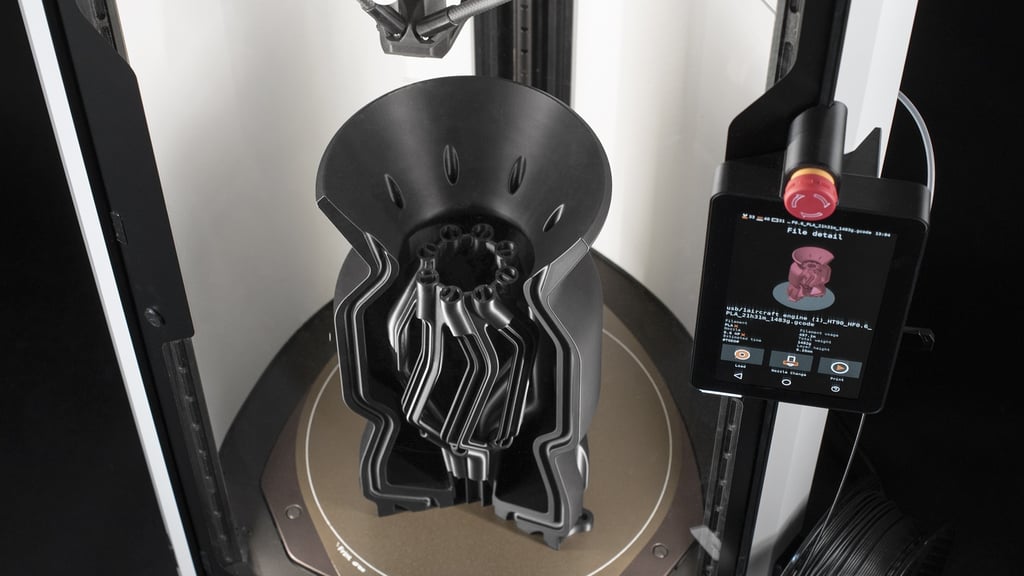
Display: 7″ touchscreen
Firmware: Klipper-based with Input Shaper
Camera: Built-in for print monitoring and chamber lighting
Designed and manufactured in the EU
Accessories for Moisture-Sensitive Materials
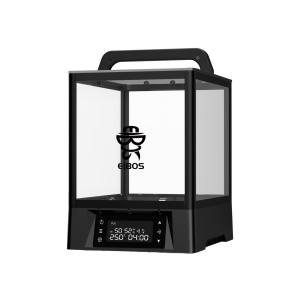
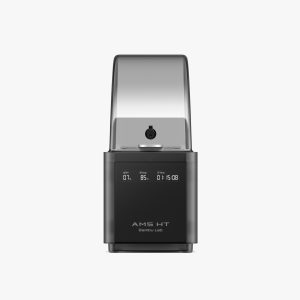
High-performance polymers like PEI, PEEK, PEKK, and PSU require carefully controlled humidity to print reliably. The HT90 can be paired with the Prusa Pro Filament Drybox (a hermetically sealed storage and printing solution) or a full industrial filament dryer for materials that demand precise, low-humidity conditions.
Reviews
There are no reviews yet