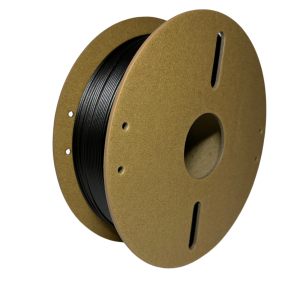
PC (polycarbonate) is a high-performance engineering thermoplastic known for exceptional strength, impact resistance, and heat resistance — the same material used in bulletproof glass and aircraft canopies. It’s one of the toughest filaments available for FDM printing, well suited to demanding functional and engineering applications.
Most PC filament prints between 260–310°C on the nozzle, with a bed temperature of 100–120°C. Exact settings vary by brand and formulation, so always check the specific product listing for the manufacturer’s recommended profile.
Yes, an enclosure is effectively required. PC needs a sustained chamber temperature to prevent aggressive warping and layer splitting, and an all-metal hotend is also necessary since standard PTFE-lined hotends degrade at the temperatures PC requires.
Yes. PC is hygroscopic and moisture causes hydrolysis, a chemical reaction that weakens the polymer from within, so a print can look fine but still be structurally compromised. Dry at 80–90°C for 6–8 hours before printing, and store spools sealed with desiccant.
PC has significantly higher tensile strength and impact resistance than PLA, ABS, or PETG, along with a much higher heat deflection temperature. It’s the step up when ABS or PETG aren’t strong enough, but full engineering-grade materials like PEEK are overkill.
A PEI sheet with a thin layer of glue stick as a release agent gives the most reliable results. PC bonds very strongly to bare PEI or glass at the required bed temperatures, which can damage the surface or the part on removal, so the glue stick barrier isn’t optional.
PC has a high tendency to warp due to its high glass transition temperature and shrinkage during cooling. A stable enclosed chamber, minimal to no part cooling fan, a wide brim, and a hot, well-adhered first layer all help keep parts flat and attached to the bed.
PC suits demanding functional parts such as automotive brackets and housings, drone frames, transparent enclosures and light guides, and mechanical fixtures exposed to heat or impact — anywhere strength and temperature resistance matter more than ease of printing.