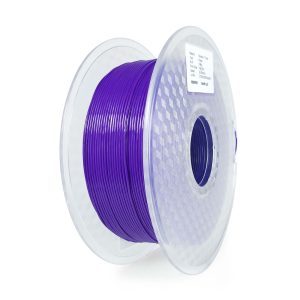
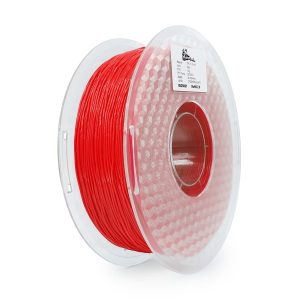
TPU (thermoplastic polyurethane) is a flexible, rubber-like filament that can stretch and bend without breaking, then return to its original shape. It’s the go-to material for phone cases, gaskets, cable protectors, wearable props, and any part that needs to flex, absorb impact, or resist wear.
Shore hardness measures how flexible a TPU is — lower numbers on the Shore A scale are softer and stretchier, while higher numbers are firmer. 95A is the most common grade, offering a good balance of flexibility and easy printability, while softer grades like 85A feel closer to a rubber band but are harder to print reliably.
Most TPU prints well between 210–240°C on the nozzle, with a bed temperature of 30–60°C. Print speed is the most important setting — keep it slow, generally 20–30mm/s for standard 95A TPU, since printing too fast causes the flexible filament to buckle in the extruder.
A direct drive extruder is strongly recommended, especially for softer TPU grades below 90A, since the short filament path gives much better control over feeding. Firmer 95A TPU can be printed on a Bowden setup with reduced speed and minimal retraction, though results are generally more reliable with direct drive.
Jamming is almost always caused by printing too fast, using too much retraction, or wet filament buckling in the extruder. Stringing usually points to a nozzle temperature that’s a touch too high or moisture in the filament — reducing temperature by 5°C and drying the spool are the first fixes to try.
Yes. TPU is highly hygroscopic and absorbs moisture quickly, which causes stringing, surface bubbling, and weak layer adhesion. Dry it before printing if the spool has been open for more than a few days, and store it sealed with desiccant between print sessions.
TPU rarely warps, so bed adhesion is one of the easier parts of printing it. It does bond strongly to some surfaces like PEI, so avoid adhesion aids that make removal harder, and simply flex the build plate once cooled to release the print cleanly.
TPU suits any part that needs to bend, stretch, or absorb impact — phone cases, cable organisers, gaskets and seals, grips, drone propeller guards, and flexible joints in articulated models. It also holds up well against oils, fuels, and cleaning chemicals, making it useful for functional and industrial parts too.